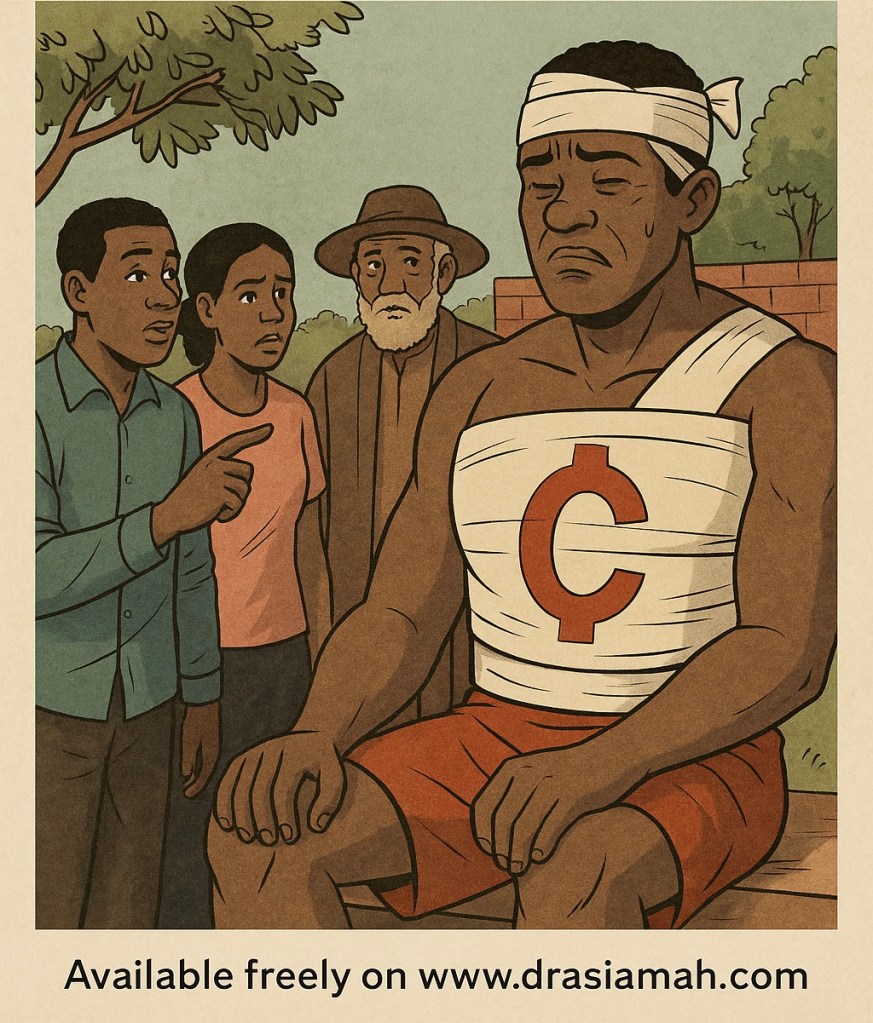
The arena still echoed with cheers for Cedi. The trotro mates whistled victory tunes, the kelewele sellers sang exchange-rate choruses, and even the drunk palm wine tappers staggered in to declare, “Our boy is back! Dollar is limping!”
But while the stadium roared, the real world – the quiet, unforgiving marketplace – remained unimpressed. Markets do not clap; they calculate.
The Tomatoes Speak
At Makola, tomatoes sat in their baskets, glistening under the sun.
One tomato whispered to the other:
“So, they say Cedi is now a lion on the battlefield.”
The other replied:
“Lion or lizard, did you see the cost of transport? My journey from Navrongo to Accra is still paid in diesel, and diesel bows to Dollar. Let Cedi run laps in the arena; my price will not fall just because the crowd is excited.”
The women selling them nodded in agreement, adjusting their headscarves.
The Fuel Frowns
At the pumps, fuel yawned and stretched.
“Look at them,” fuel said, watching the arena fireworks on a small TV. “Cheering as if my liters care about hashtags. Until the refinery sings, and until government taxes loosen their belt, I will not bow. Cedi can do press-ups on steroids, but I – fuel – still listen to global oil prices, not local slogans.”
A taxi driver grumbled, wiping sweat from his brow:
“So, this miracle rate, why hasn’t my tank clapped for me yet?”
Cement Crosses Its Arms
Cement sat in its dusty bag at the hardware shop, shoulders broad and unmoved.
“Exchange rates dance every day,” Cement growled. “But my story is longer. Energy costs, shipping fees, raw materials—all of them still salute the giants. If Cedi wants me to fall in price, he must win the marathon, not just the sprint. For now, I remain heavy.”
The mason sighed. “So my building project still sleeps. Even after this miracle, blocks still cost like I’m building with gold.”
The Market as Chorus
Everywhere the same chorus rose:
- Soap in Kaneshie: “We were imported at the old rate. We cannot turn into charity overnight.”
- Rice in Kumasi: “Until local harvests replace me, my price is chained to ships, not cheers.”
- Pharmaceuticals in Tema: “We bow to Euro’s clipboard, not Cedi’s sprint.”
The people began to murmur. “If Cedi has defeated Dollar and slapped Pound, why are our pockets still crying? Why is kenkey still arguing with transport fares? Why does waakye ignore the exchange rate headline?”
The Old Wise Man Under the Baobab
The Old Wise Man listened as the murmurs reached him. He tapped his staff and declared:
“Ɛsono afu gye mmerɛ ansa na aprɔ“
(The elephant may be dead, but its belly takes time to collapse.)
He explained:
“When Cedi rises in the arena, it does not mean prices will fall tomorrow. Traders bought their stock at yesterday’s rate, so they price for yesterday’s pain. Wholesalers fear tomorrow’s uncertainty, so they pad today’s price. And taxes and levies are glue on the price tag; even when the exchange rate breathes out, the levies keep breathing in.”
The apprentices nodded. “So, Grandfather, victory in the arena is not the same as peace in the market?”
He smiled. “The stomach listens to the kitchen, not the stadium. The day we plant enough, process enough, and save enough, then the kitchen will finally clap for the arena.”
Policy Reflection – Why Prices Stay Sticky
- Import Lags: Goods already in shops were purchased at old rates. Prices don’t adjust immediately.
- Expectations: Traders hedge against possible future depreciation by keeping prices high even when Cedi rises.
- Taxes & Levies: Petroleum, utilities, and cement prices are cushioned (or worsened) by taxes and regulatory margins that don’t move with the forex rate.
- Structural Weakness: Local production is too weak; we depend on imports for food, fuel, medicine, and construction. Until that changes, forex improvements won’t translate quickly.
Lesson: A “miracle” exchange rate does not mean instant cheaper prices. The market runs on memory, caution, and structure – not on applause.

 Dr. Asiamah's Gazette