Agyakrom Blog Series, Blog Series, Ghana's Political Economy, Ghanaian Politics, Political Satire & Fiction, Politics, Sarcastic Commentary, The Bandage Economy

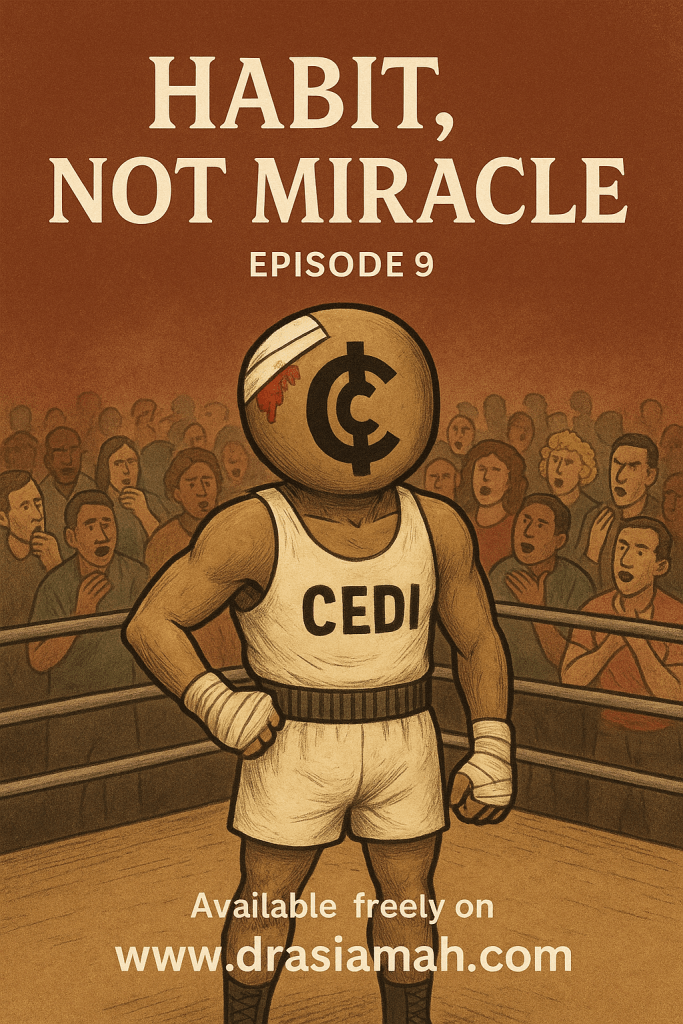
Final Episode: Habit, Not Miracle

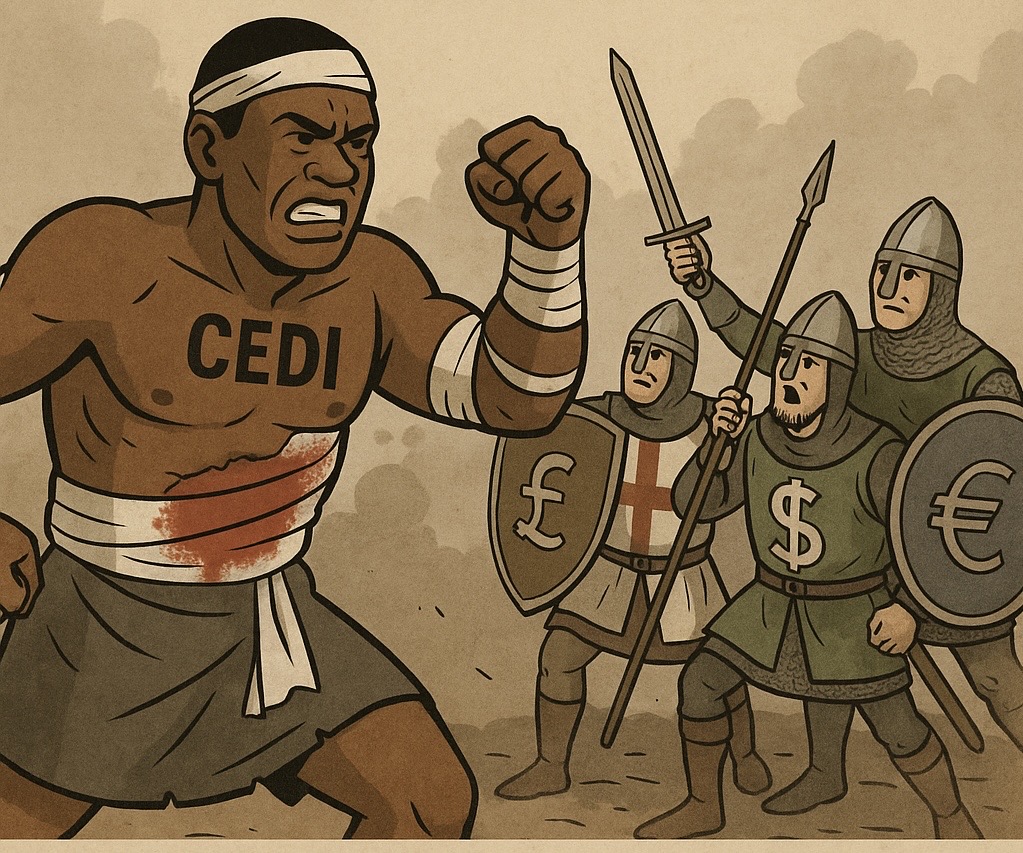
The arena was quieter now. The drums no longer beat like war; the songs of victory had faded into cautious murmurs. Cedi was not sprinting anymore. He was walking—slow, deliberate, with soap stings still fresh on his wound. His steps were heavy, but they were his own, not borrowed from a syringe.

The crowd was divided. Some sulked, disappointed that there were no fireworks or miracle punches.
“Where is the lion we saw last month?” they complained.
Others watched silently, realising for the first time that the real fight was not against the giants in the arena, but against the wounds beneath Cedi’s skin.


Cedi’s Training

Every morning, before the crowd arrived, Cedi practiced. No steroids, no bandages – just discipline.

  • He lifted sacks of local rice, learning to depend less on imported bags.
  • He sparred with cassava and yam, training his stomach to be filled by what his soil grew.
  • He studied the moves of cocoa, not as raw beans but as chocolate and cosmetics, teaching his arms to strike with value addition.
  • He jogged alongside industry, sweating to build factories that could meet Euro’s clipboard standards.

It was not glamorous work. There were no cheering trotro mates, no dancing politicians. But slowly, his muscles remembered how to fight without artificial strength.


The Giants Observe

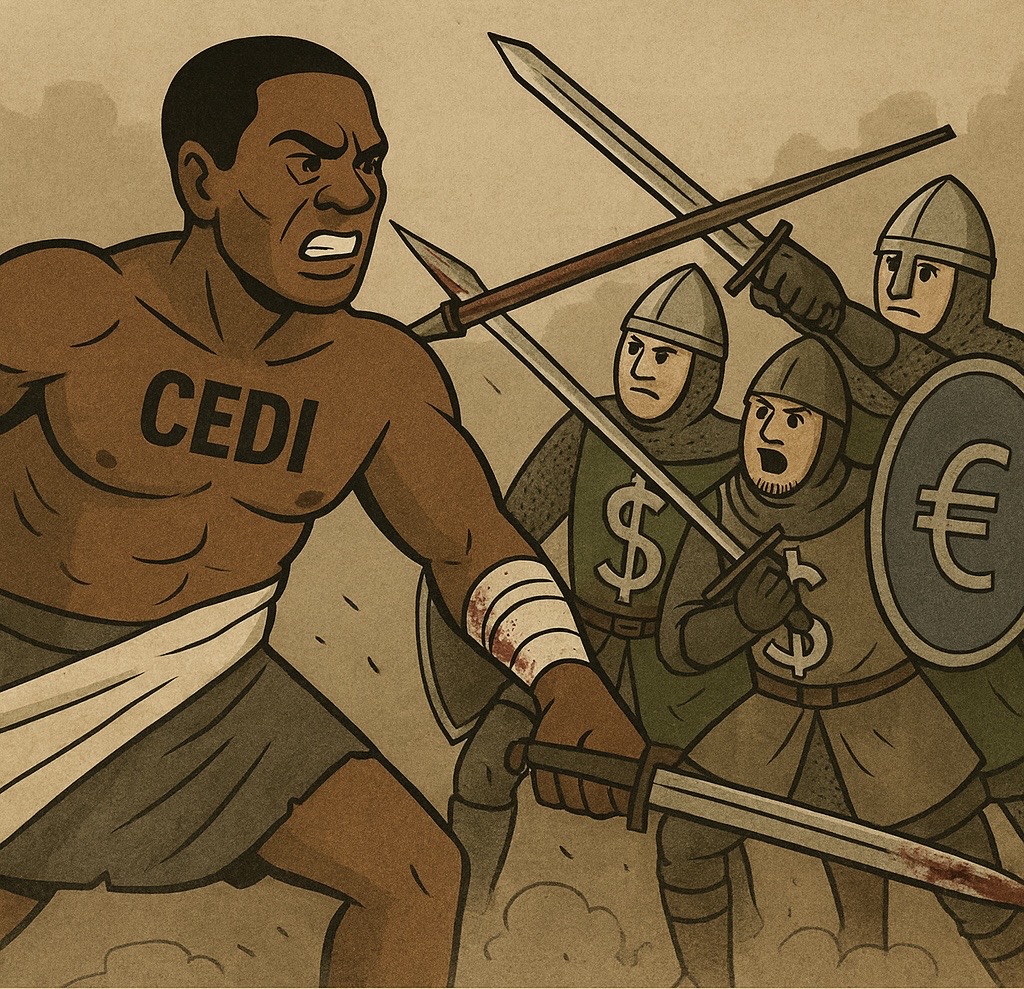
Dollar folded his arms. “Hmm. He is learning to refine oil? This may weaken my hold.”

Pound frowned. “He is training teachers and engineers at home? That might reduce my September harvest.”

Euro adjusted his clipboard. “If his factories begin to meet my standards, he may turn from applicant to competitor.”

The giants did not panic; they were too seasoned for that. But for the first time, they respected Cedi – not for his sprint, but for his discipline.


The Crowd Learns

At first, the people complained. Prices did not fall overnight. Kenkey was still arguing with transport. Waakye was still gossiping with taxes. But as moons turned into seasons, they noticed something strange:

  • Tomatoes stopped panicking every time Dollar coughed.
  • Cement began to price itself with more confidence.
  • Farmers smiled as local rice found loyal customers.
  • The fuel pump still frowned, but less often than before.

The people realised: true strength is not a miracle – it is a habit.


The Old Wise Man’s Final Lesson

Under the baobab, the Old Wise Man raised his staff one last time.

“Ahwenepa nkasa.”
(Precious beads do not rattle.)

He explained:
“Real strength is quiet. It does not announce itself with noise or slogans. It is seen in steady prices, in factories that hum daily, in reserves that sleep peacefully, in farmers who plan next season without fear. Cedi must not chase applause anymore; he must build silence that lasts.”

The apprentices bowed. “So, Grandfather, the battle is not won in one miracle?”

He smiled. “No, my children. Miracles impress crowds. Habits build nations.”


Policy Reflection – The Long Lesson of Cedi

  1. Short-term fireworks don’t feed households. True stability comes from structural reforms: diversifying exports, building local industries, investing in agriculture, and fiscal discipline.
  2. Habit beats miracle. A currency that steadily strengthens on productivity and buffers is worth more than one that sprints on steroids.
  3. Quiet progress is real progress. The best economic victories are invisible—when prices stay steady, when reserves quietly grow, when the exchange rate ceases to dominate the evening news.
  4. Resilience over applause. The goal is not to “beat Dollar, Pound, or Euro” in a sprint but to build an economy that does not collapse when they flex.

Closing Scene

As the sun set over Agyakrom Arena, Cedi stood tall – not roaring, not sprinting, but breathing steadily. The crowd no longer screamed his name, but they watched him with a new kind of respect.

For the first time in years, Cedi was not a miracle patient or a wounded warrior. He was simply a fighter in training – learning that the true battle is not won in the arena but in the habits of the everyday.

And under the baobab, the Old Wise Man whispered to himself:

“Strength is not a miracle. Strength is a habit.”
Blog Series, Ghana's Political Economy, Ghanaian Politics, Political Satire & Fiction, Politics, Sarcastic Commentary, The Bandage Economy

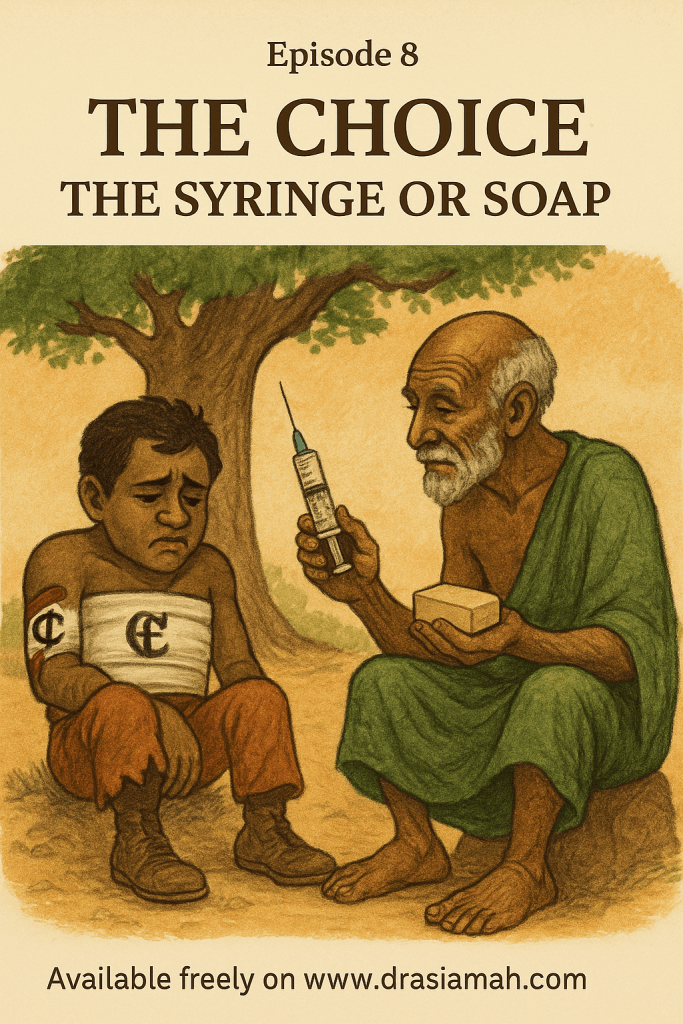
Episode 8: The Choice – Syringe or Soap

The sun rose again on Agyakrom Arena. The crowd was restless. They had tasted the sweetness of Cedi’s brief sprint, and now they wanted more.

“Inject him again!” shouted a trader, waving her invoice.
“Yes, give him another booster!” chorused the trotro mates.
“Let him run like Usain Bolt forever!” laughed a politician in the stands, secretly eyeing the next election.

In the corner, the NDC medics were already preparing another vial. The syringe gleamed, filled with liquid labelled Confidence II. They whispered:

“Another jab will revive him. The crowd will calm. The headlines will clap. Who cares if it’s temporary? Politics is fought week by week, not decade by decade.”

They beckoned Cedi over. “Come, fighter. Let us top you up. You will feel like a lion again.”


The Old Wise Man Arrives

But before Cedi could step forward, the Old Wise Man rose from beneath his baobab. He carried no syringe. Instead, in his wrinkled hands, he held a basin of water and a rough brush. Soap floated on the surface, sharp-smelling and honest.

“Fighter,” he said, “you have two choices:

  • Take the syringe, and the crowd will cheer again, but the wound beneath the bandage will fester deeper.
  • Take the soap, and the pain will be great, the screams loud, and the crowd impatient – but the wound will heal.”

The arena went quiet.


The Crowd Splits

Half the crowd shouted, “Take the syringe! We cannot endure pain. Let him fight now!”

The other half murmured, “Maybe the Old Man is right. Pain today could mean peace tomorrow.”

The kelewele seller shook her head. “Sweet plantain is fried in hot oil, not lukewarm water. Real healing needs fire.”

A farmer in the corner added, “We cannot keep selling raw cocoa and buying foreign chocolate. Give him the soap.”


Cedi’s Dilemma

Cedi looked at the syringe. It promised relief, applause, and another sprint. But he remembered the whispers of tomatoes, the arrogance of Dollar, the truth of Pound, the clipboard of Euro. He remembered that even after his miracle run, kenkey prices refused to bow.

He turned to the Old Wise Man.
“But Grandfather, the soap will sting. The crowd will boo. They may even stone me.”

The Old Man nodded. “Yes. Pain is the tuition of healing. But remember: Se wo were fi na wosankofa, yenkyi. (It is not wrong to go back for what you forgot.) Return to the hard work you abandoned: discipline, savings, local production. Do it, and one day you will not need injections to stand.”


The Choice

The medics extended the syringe.
The Old Man held out the basin and brush.

Cedi’s hand trembled. He reached toward the syringe… then paused. He stared at the crowd. Some were chanting; some were frowning; some were already calculating how to hedge against his next stumble.

Then, slowly, he pushed the syringe aside and reached for the soap.

The medics gasped. The crowd groaned. The politicians scowled.

Cedi dipped the brush into the basin and peeled off the bandage. The open wound met soap, and he screamed louder than the drums of Borborbor. The pain echoed across the arena. The crowd scattered, covering their ears. But beneath the screams, something real began: healing.


Policy Reflection — Syringe vs. Soap

  • Syringe (short-term fixes): More interventions, reserve burn, borrowing, administrative forex controls. They bring quick relief but deepen long-term fragility.
  • Soap & Brush (structural reforms): Fiscal discipline, buffers from exports, industrialisation, value addition, and import substitution. Painful, slow, unpopular—but the only path to resilience.
  • Lesson: Healing requires discipline, sacrifice, and reforms that outlive election cycles. The crowd may not clap today, but tomorrow their pockets will thank you.

Blog Series, Everyday Life, Ghana News, Ghana's Political Economy, Ghanaian Politics, Political Satire & Fiction, Politics, The Bandage Economy

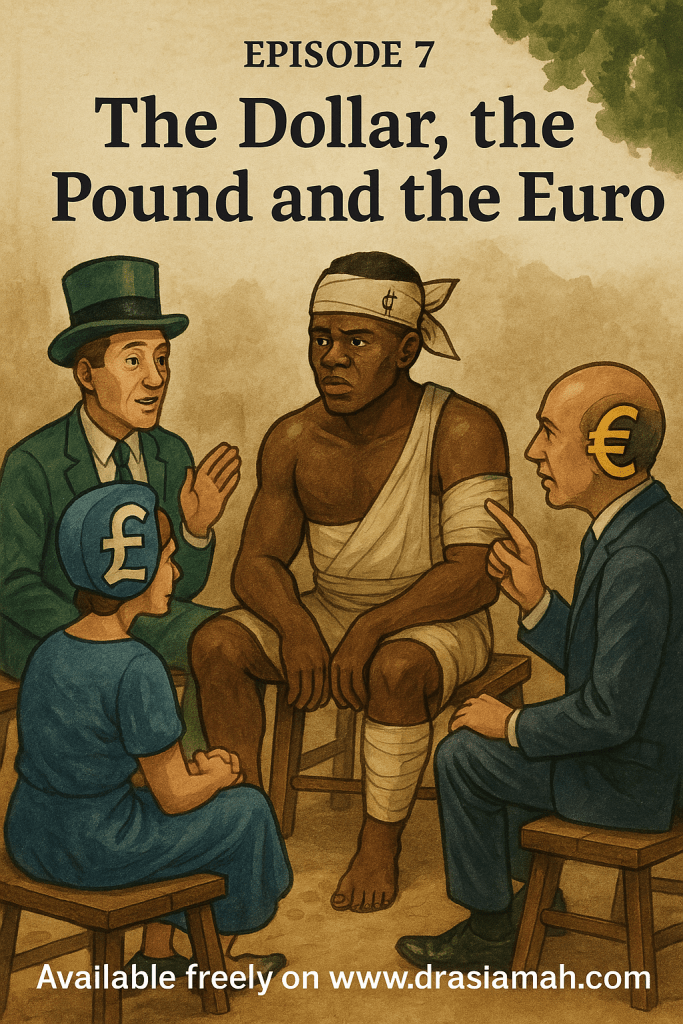
Episode 7: Enemies Tell the Truth

The night deepened at Agyakrom Arena. Cedi crouched in the dust, panting, his bandage damp with sweat and whispers. The steroids in his blood had dimmed; each punch now felt like an overdraft. The crowd still clapped, but their rhythm was half-hearted, like churchgoers forced to sing a hymn they don’t know the tune to.

Then something unusual happened: the giants stopped fighting.

Instead of charging, DollarPound, and Euro stood tall, brushing dust from their shoulders. They looked at Cedi – not with scorn this time, but with the weary patience of creditors who have seen too many debtors at their desk. One by one, they spoke—not to taunt, but to teach.


Dollar’s Confession

Dollar stepped forward, his voice booming like oil rigs in the Niger Delta.

“Cedi, hear me. I am not just your enemy; I am your addiction. Every time you thirst for fuel, you come running to me. Every time you borrow, you do it in my name. You waste your reserves trying to tame me, but you never ask why you need me so much.

Build your own refineries, cut your deficits, grow exports, and I will lose my grip on your throat. Until then, I am your oxygen. And if you don’t manage your breath, you will choke.”

Cedi lowered his eyes. He remembered the endless fuel queues of old, the heavy import bills, the sleepless nights of central bankers.


Pound’s Sermon

Pound polished his monocle and cleared his throat like a colonial headmaster.

“Cedi, every September you flood to me with tuition fees, remittances, and consultancy payments. You drain yourself financing dreams abroad while your own schools hunger for chalk. Spare parts, luxury imports, legal advice – you lean on me for all.

Train your own teachers, fix your industries, grow your skills at home. Then I will stop being your examiner. Until then, I am your headmaster, and I mark in sterling.”

Cedi felt the sting. He saw parents selling land to send children abroad, businesses wiring pounds for spare parts, officials hiring British consultants to solve problems Ghanaian brains could have solved.


Euro’s Lecture

Euro shuffled his files, stacked neatly like regulations in Brussels.

“Cedi, your bandage will not protect you from me. You import my machines, my pharmaceuticals, my wheat, my vehicles. My standards control your exports. Until you process cocoa into chocolate, until your farmers meet sanitary tests, until your industries add value, you will remain chained to my clipboard.

Diversify, industrialise, and I will become your market instead of your master. Ignore this, and every cargo ship docking at Tema will remind you who holds the pen.”

Cedi clenched his fists, but he could not deny the truth. Even cocoa – the pride of his veins—was exported raw, only to return as imported chocolate bars.


The Old Wise Man Nods

From under the baobab, the Old Wise Man raised his staff and chuckled.

Nokware nsuo nom yɛ den.
(Truth is a hard water to swallow.)

Sometimes, even your enemies tell you the bitter truth your friends hide. Do not hate the water because it is hard; drink it and grow teeth.”

The apprentices asked, “Grandfather, why would enemies help?”

He replied: “Because they don’t need to lie. Their profit is secure. It is your pride that blinds you. A man drowning in the river may refuse the insult, but he cannot refuse the water.”


Cedi’s Reflection

For the first time, Cedi did not roar back. He sat quietly, staring at the dust. The ache under the bandage pulsed with each word.

He realised the giants were not just bullies – they were mirrors. They exposed his weaknesses: oil dependence, education outflows, import addiction. He could fight them forever and lose, or he could listen and heal.


Policy Reflection – When Enemies Tell the Truth

  • Dollar’s truth: Ghana’s dependence on oil imports and borrowing drains reserves. Real cure = refinery capacity, fiscal discipline, and export diversification.
  • Pound’s truth: Tuition, remittances, spare parts, and consultancy dependence funnel cedis into pounds. Real cure = strengthen education, industrial base, and domestic services.
  • Euro’s truth: Standards and imports tie Ghana to Europe. Real cure = add value to exports, meet standards, and industrialise.

Lesson: External powers may sound arrogant, but their pressure exposes internal weaknesses. Their insults are uncomfortable data.

Blog Series, Ghana's Political Economy, Ghanaian Politics, Politics, The Bandage Economy

Episode 6: The Steroid Hour Wanes

The moon rose over the Agyakrom Arena. The cheers of the crowd had dulled into background chatter—like trotro horns during rush hour, still noisy but no longer thrilling. Cedi, our patched-up fighter, still danced around the giants, but something was changing.

The bandage that once felt secure now itched like an overdue debt. The steroids, once burning like fresh palm wine, were thinning in his veins. His arms felt heavier, his legs slower. The roars of the crowd, once intoxicating, now sounded faint—like applause from people too far away to buy you kenkey.


Dollar Notices First

Dollar, the loud landlord of the arena, smirked.
“Ah, I knew it. Steroids are expensive friends. Look at him—breathing harder, swinging softer. My oil invoices will not wait forever. Reserves are draining, and soon he will come crawling.”

He stretched, broad-chested, and tapped his oil barrels like drums. The sound alone made importers nervous.


Pound Adjusts His Monocle

Pound, still holding tuition bills in one hand and spare parts in the other, leaned forward.
“September is coming, my boy. Parents will need me, car mechanics will need me, consultants will need me. When they rush, you will stumble again. Your bandage cannot stop school fees.”

He chuckled in that smug British way—half sarcasm, half invoice.


Euro Shuffles His Papers

Euro, tall and silent, stacked his regulatory files.
“Imports due, my friend. You may beat me in applause, but my clipboards are patient. Machinery orders, wheat cargo, vaccines, pharmaceuticals—they are already on their way. When they land, your boosters will not save you.”

He smiled thinly, as if to say: “I am bureaucracy. I do not rush, but I never forget.”


The Crowd Begins to Doubt

From Makola to Kejetia, people started to whisper again.

  • “Ei, but why hasn’t kenkey price dropped?”
  • “Transport still the same—didn’t they say Dollar is down?”
  • “Hmmm, the cedi is slowing. Or is it just me?”

The kelewele seller sighed. “Miracles don’t fry plantain. Only palm oil and patience do.”


Cedi Feels the Ache

Cedi swung another punch at Pound, but it missed. He tried to jab at Euro, but his arm trembled. The ache under the bandage was now louder than the crowd.

For the first time since the miracle, Cedi whispered to himself:
“Am I healed, or just high?”

He looked at the medics in the corner. They were already rummaging for another vial, another injection. He shivered. Steroids made him strong, but also made him afraid—afraid of the moment they ran out.


The Old Wise Man Shakes His Head

Under the baobab, the Old Wise Man spoke again:

“Anomaa a ɔntua dua so a, ɛto no fam.”
(The bird that refuses to perch will fall.)

“Cedi must learn that you cannot fight forever on borrowed wings. The medicine was good for standing up, but standing up is not the same as standing strong. If he refuses to pause, to rebuild, to rest on solid perches – exports, savings, buffers – he will fall again. And this time, the crowd will not be surprised.”


Policy Reflection — The Fading Steroid Effect

  1. Reserve Drain: Central bank interventions buy temporary calm, but without new inflows, reserves shrink and confidence erodes.
  2. Seasonal Pressures: Tuition, import bills, and debt servicing create recurrent demand spikes that return as soon as the boosters fade.
  3. Sticky Prices: Inflation slows, but structural costs (fuel, food imports, levies) prevent prices from falling quickly, souring public perception.
  4. Credibility Risk: Markets, traders, and citizens can sense when recovery is built on chemicals, not capacity.

Lesson: Steroids are for emergencies, not diets. Rely on them too long, and they lose their power – while the underlying wound deepens.

Blog Series, Ghana's Political Economy, Ghanaian Politics, Political Satire & Fiction, Politics, The Bandage Economy

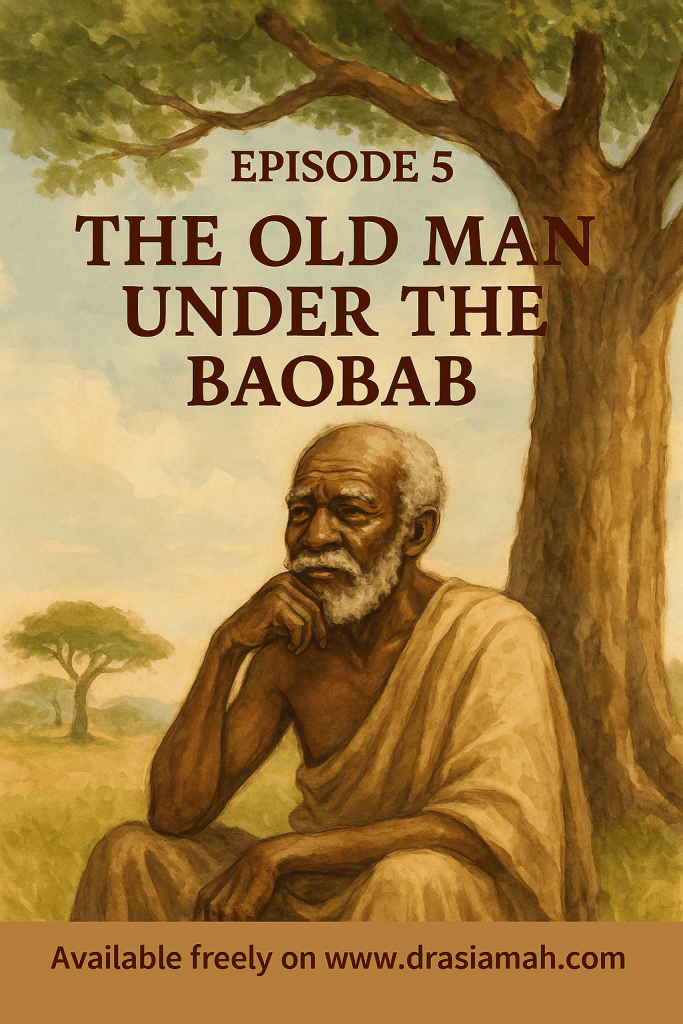
Episode 5: The Old Man Under the Baobab

The stadium noise began to soften. The initial fireworks of Cedi’s resurrection still glimmered in the minds of many, but the murmurs from Makola, Kaneshie, and Kejetia were now echoing louder than the trotro horns. Tomatoes had spoken. Cement had complained. Fuel had rolled its eyes. And the ordinary stomach – always the most honest economist – kept grumbling.

In the shade of the mighty baobab, the Old Wise Man sat. His beard was long like the minutes of a parliamentary debate, his eyes heavy with memories of cycles past. He had seen currencies come and go, debts pile and collapse, slogans fly and expire. Around him gathered apprentices, traders, students, and curious onlookers who wanted to understand why their cheers had not bought them cheaper kenkey.


The Old Wise Man Speaks

He tapped his staff on the earth three times. Dust rose, as if even the soil knew he was about to speak sense.

“My children,” he began, “you celebrate because the bandaged warrior Cedi has leapt to his feet. You sing because the giants stumbled for a moment. But let me tell you something:

Sɛ ɛprɔ a, yɛbɛte ne kankan.
(When it rots, we will smell the stench.)

What does this mean? A wound under a bandage may look neat, but when it festers, it cannot hide forever. The smell will betray the silence.”

The crowd leaned closer.

“Steroids can make a man run. But steroids do not heal broken bones. Bandages can cover sores, but they cannot cure infections. And when leaders chase optics instead of surgery, the crowd will clap today but cough tomorrow.”

He paused, allowing the proverb to sink like gari into water.


The People Respond

A market woman asked, “So, Grandfather, are you saying the NDC medics were wrong to revive Cedi?”

The Old Man smiled. “No. A dead fighter cannot train. Emergency medicine has its place. But my worry is when emergency becomes tradition, when steroids replace food, when applause replaces planning. That is when the wound rots.”

A young graduate interjected, “But isn’t it good that inflation has slowed a bit, that the exchange rate looks calmer?”

The Old Man nodded. “Yes, it is good to slow the bleeding. But slowing bleeding is not the same as restoring strength. If you remove the bandage and find no healing beneath, then what have we gained? We are only postponing the smell.”


The Giants Listen Too

From across the arena, DollarPound, and Euro leaned against the ropes, listening. They smirked, but even they knew the truth of the proverb. They had seen Cedi rise before, only to stumble again.

Dollar whispered, “He will come running back for me when reserves thin.”
Pound muttered, “September will remind him whose tuition he pays.”
Euro sighed, “Imports will not forgive him. They never do.”

The Old Wise Man raised his voice so that even the giants could hear:
“Your enemies are not merely bullies; they are reminders. They expose what you refuse to fix. Do not hate them – learn from them. For if you build your canoe strong, the flood cannot disgrace you.”


Proverb

“Sɛ ɛprɔ a, yɛbɛte ne kankan.”
(When it rots, we will smell the stench.)

Meaning: Temporary cover-ups will always reveal themselves. True solutions cannot be faked.


Policy Reflection – The Wisdom of the Baobab

The Old Man’s parable cuts deep:

  1. Emergency medicine is necessary – Liquidity injections, IMF inflows, and forex controls can prevent collapse in the short run.
  2. But temporary measures have consequences – They risk depleting reserves, creating distortions, or masking deeper weaknesses.
  3. Structural reform is the only cure – Without boosting exports, building buffers, and cutting wasteful spending, the “smell” of crisis will return.
  4. Markets have long memories – Traders, investors, and ordinary citizens will eventually sense when strength is artificial.

Lesson: The test of policy is not applause in the moment but resilience in the storm. Short-term victories mean little if they cover long-term decay.

Blog Series, Ghana's Political Economy, Ghanaian Politics, Political Satire & Fiction, Politics, The Bandage Economy, UK Politics

Episode 3: The Giants and Their Taunts

The dust settled for a moment at the Agyakrom Arena. Cedi was on his feet again, swinging punches with a swagger only steroids can buy. The crowd still sang, kelewele still hissed in pans, and trotro mates hung off the stands like drunken griots, whistling victory songs.

But the giants had not retired. They had only been surprised. And when giants recover from surprise, their words weigh heavier than their fists.


With a chest broad as the Atlantic and oil barrels rolling behind him, Dollar spat sand and bellowed:

“Listen, small boy! You think you can beat me with temporary medicine? I am not just a fighter; I am plumbing. Every pipe in your economy flows through me – fuel contracts, global trade, your IMF injections. If your pipes leak, I will flood your house. Fix the pipes, and maybe – just maybe – I will calm down. But keep wasting reserves, and I will return with thunder.”

Cedi clenched his fists, but the ache under the bandage whispered, “He is not lying.”


Adjusting his dusty monocle, Pound cleared his throat like a retired headmaster calling assembly.

“You colonial students never learn. Every September, you run to me with your school fees. Every December, you buy my spare parts for your trotro funerals. Every Easter, you come for my visas, my remittances, my consultants. And then you complain when I tighten your throat? Build skills at home, and I shall stop billing you like a stubborn headteacher. Until then, I remain your examiner, and the pass mark is in sterling.”

Cedi glared, but behind his fury lay memories of parents selling land for tuition abroad. He had no reply.


Euro dusted his stack of papers, each stamped with blue stars. His twenty-seven soldiers stood like clerks behind him, filing invoices.

“You punch me today, but tomorrow your ships will dock at my ports, begging for machinery, medicines, and wheat. You say you can fight me, but can your factories meet my standards? Can your farmers pass my sanitary tests? You depend on my bread, my vaccines, my machines. Until you build your own, you cannot escape my clipboard. Imports due, my friend. Imports are always due.”

Cedi tried to laugh it off, but deep in his gut he remembered: even cocoa beans needed European chocolate factories before they reached their true value.


The people in the stands argued.

Some jeered at the giants:
“Stop bullying our Cedi! Today he is winning. Tomorrow too he will win!”

Others scratched their heads:
“Hmm. Dollar, Pound, and Euro sound arrogant, but are they not speaking truth? If we do not produce, how can we stop them from charging us rent?”

The kelewele seller muttered, “My oil still comes from Dollar’s cousin. Unless we fry with palm oil only, we will keep smelling his kitchen.”


The Old Wise Man listened from his corner, eyes closed, staff tapping the earth like a metronome.

He spoke softly:
“Ɔkɔtɔ nwo anoma.”
(The crab does not give birth to a bird.)

“The Cedi cannot pretend to be what he is not. Steroids make him leap, but they cannot change his bones. If he does not build his own muscles—factories, farms, savings—he will always be dragged back to the mudflats where the crab belongs. A crab cannot fly; it must walk its own way. And if it wishes to fly, it must build wings, not borrow feathers.”

The crowd fell silent. Even the trotro mate stopped whistling.


Policy Reflection — What the Giants’ Taunts Mean

  • Dollar’s taunt = Ghana’s dependence on oil imports, external borrowing, and reserve burn. Without fixing fiscal leaks and building real reserves, Dollar remains the landlord.
  • Pound’s taunt = Education, remittances, spare parts, and consultancy dependence. Heavy outflows to the UK weaken Cedi each year. The solution is building skills, industries, and alternatives at home.
  • Euro’s taunt = Dependency on European standards and imports (machines, medicines, food). Until local industries meet those standards, Euro’s clipboard rules Ghana’s destiny.

Lesson: These “giants” are not just villains – they are mirrors. Their taunts expose the weak ribs of the economy. The crowd may not like the insults, but the insults are data.

Blog Series, Everyday Life, Ghana's Political Economy, Ghanaian Politics, Politics, The Bandage Economy, UK Politics

Episode 2: The Bandage Miracle

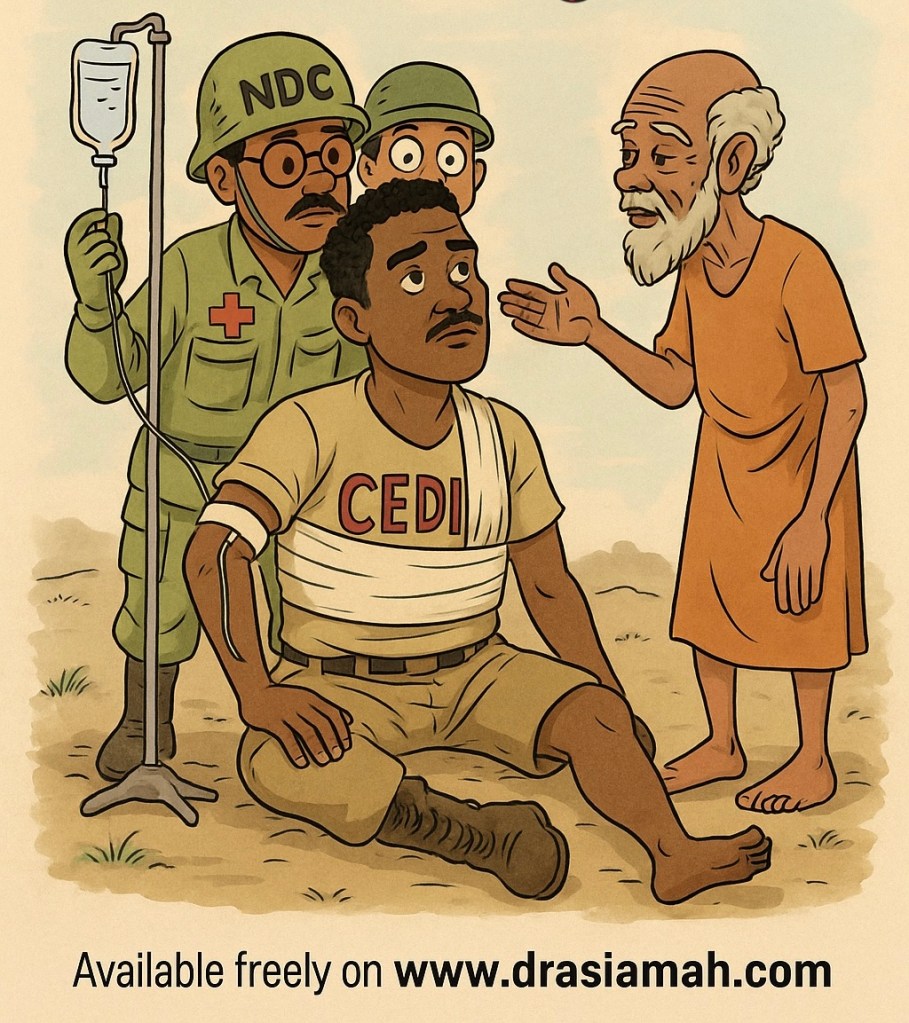
At dawn the sirens wailed and the NDC Brigade arrived – not with sabres but with stethoscopes, calculators, and a trolley that squeaked like a budget line. They found Cedi facedown, chest heaving, eyes cloudy from Dollar’s oil hooks, Pound’s spare‑parts jabs, and Euro’s paperwork chokehold.

“Vitals?” the chief medic asked.

“Pulse erratic. Confidence low. Reserves anaemic. Imports demanding transfusion,” replied the junior medic, thumbing a ledger as if it were a heartbeat monitor.

“Hmm,” the chief said, rolling up their sleeves. “We cannot build a new ribcage on the battlefield, but we can stop the bleeding and get him standing. The crowd needs a fighter, not a eulogy.”

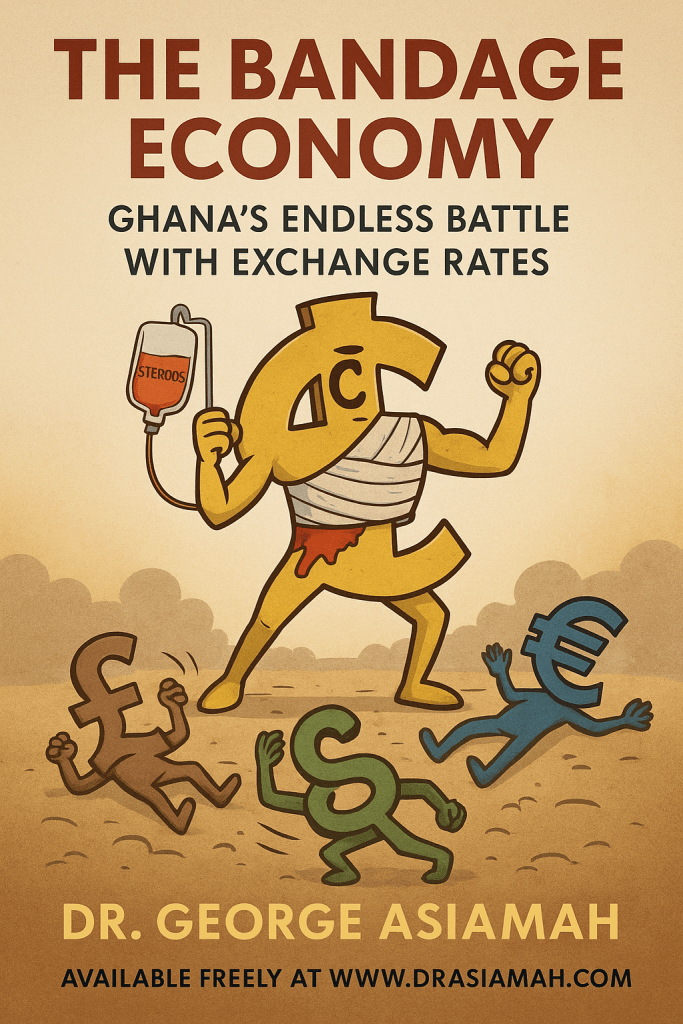
They produced a bandage so wide it could wrap a stadium – tight enough to quiet a scream – and an ampoule labelled Booster (the kind that makes a tired goat chase a Land Cruiser). One jab. Two. A whisper of prayers and policy. The squeaky trolley exhaled.

Cedi twitched.

Another ampoule – this one called Confidence (side effects: swagger, selective hearing, short poems on social media).

Cedi blinked, sat up, spat dust, and – before anyone could recite a fiscal rule – leapt to his feet.

The arena erupted.

“Cedi! Cedi! Cedi!” The kelewele sellers beat ladles on pans; the trotro mates whistled a high‑pitch exchange rate. Even tomatoes – usually stoic – blushed a little.

Cedi tested his limbs like a man fresh from a long dream. He flexed. The bandage hugged his ribs. The Booster burned hymns in his veins. He sprinted.

First, he feinted at Dollar – a quick combination of auctions and attitude. Dollar stumbled, surprised that this same patient was now a pursuer. Then Cedi pirouetted and slapped Pound so neatly that Pound’s monocle somersaulted into the dust. Euro – never theatrical – adjusted his stack of standards but still caught a neat hook that sent three of his smaller allies scrambling for their compliance manuals.

For a moment, even the giants looked… mortal.

“Wonders shall never end!” a trader shouted, waving an invoice like a victory flag.

“See our boy – fresh like new salary!” a teacher laughed, already calculating what his arrears could buy if this miracle held.

From under the bandage, a dull ache cleared its throat. I’m still here, it said. But the drums were louder than pain, and Cedi – full of Confidence – could finally hear himself think louder than the crowd.

He prowled the ring.

Dollar scowled, nursing his jaw. “Enjoy your lap, small boy. Invoices don’t forget.”

Pound retrieved his monocle, breathing like a man who had just remembered colonialism had a returns policy. “Splendid sprint. We shall… reconcile later.”

Euro stacked his papers again – pharma, machinery, wheat – then said, softly: “Imports due is a bell that always rings.”

Cedi only grinned. The Boosters sang revival tunes. He felt strong enough to head‑butt a balance of payments.

Around the ring, Makola Market lifted one eyebrow.

Fuel sniffed. Nice footwork. Do I smell refinery discounts? No? Then I shall remain an elder.
Cement rotated its baggy shoulders. Exchange rate is cousin to my price, not my father.
Tomatoes adjusted their headscarves. We came by truck; truck speaks the language of diesel; diesel does not read hashtags.

Still, the mood was carnival. For a few glorious days, the story was simple: Cedi had fallen; Cedi had risen. The medics were geniuses. The giants had finally been taught manners. The memes were sweet; the thread counts were high.

But in the shade of the scoreboard, two apprentices of the Old Wise Man argued quietly.

“Miracle!” said the first. “Look how fast he runs.”

“Pain management,” said the second. “Look how tight the bandage is.”

They carried their debate to the baobab, where the Old Wise Man was mending a fishing net of proverbs.

“Grandfather,” they said, “is this healing?”

He smiled the patient smile of one who has buried several booms and three busts. “Listen, my children. A man with pepper in his veins can outrun a cheetah—but it is not speed; it is fire. A house painted gold will sparkle in the sun—but knock the wall, and you will meet its mud. If you hush the drum with palm oil, it will play a soft song; when harmattan comes, it will crack all the same.”

They frowned. “So…no miracle?”

“Miracles exist,” he said. “But budgets prefer arithmetic.”

Back in the ring, Cedi continued to dazzle. He threw a flurry at Dollar (call it guided auctions), feinted at Pound (call it administrative tightening), and smiled at Euro through a priority‑imports wink. Each move bought space, time, and – most valuable of all – silence from the panic that ruins weeks in a day.

The chief medic, watching from the corner, scribbled notes:

  • Stabilise the patient: reduce visible volatility; restore breath.
  • Buy time: signal discipline; calm expectations; tidy the rumour mill.
  • Manage the optics: markets eat with their eyes first.

Then, as the sun tilted, the junior medic whispered, “Chief, the vial box…”

“I know,” the chief said.

They both looked at the bandage. Under it, heat gathered like unasked questions.


Proverb of the Day:

“Sɛ wopɛsɛ wo kum aboa a, bɔ ne ti, na ɛnyɛ ne kotodwe.”
(If you intend to bring down an animal, aim for the head, not the knee.)

Meaning: Go for the root cause; don’t only stun the symptoms.


Policy Reflection – What the “Bandage” and “Booster” usually mean

The Bandage Miracle is the toolkit of short‑term forex stabilisation. It is useful – sometimes essential – on a battlefield. But it is not the surgery. Typical “bandage/booster” moves include:

  1. Heavy FX interventions (central bank sells dollars to market): calms spikes but burns reserves if not paired with real fixes.
  2. Forward auctions / tighter FX windows: guides price discovery; squeezes speculation – can also squeeze genuine importers if rationing bites.
  3. Cash‑flow steroids: one‑off inflows (IMF/BOP tranches, syndicated loans, commodity pre‑financing) that fatten reserves quickly – Powerful, but with repayment footprints.
  4. Administrative tightening: documentation checks, surrender requirements, limits on certain outflows—slows leaks; risks pushing demand to side streets.
  5. Interest‑rate signalling & liquidity mops: strengthen the carry to cool demand for foreign currency – helps the rate, but financing costs bite SMEs.
  6. Import prioritisation: channel scarce FX to essentials (fuel, medicines, inputs) – wise triage; also admits we can’t feed every appetite today.

Why it feels like a miracle: expectations flip fast. Fear goes quiet. The rate retreats. Headlines clap. But…

  • Prices don’t fall in a straight line. Inventories were bought at the old rate; fuel taxes and margins exist; transport costs are sticky; wholesalers hedge by memory.
  • Reserves are not rivers. If the surgery (exports, productivity, fiscal diet) doesn’t follow, the bandage wets through.
  • Credibility clocks tick. Markets forgive emergency medicine; they punish addiction.

So yes – stanch the bleeding. Wrap the ribs. Inject composure. But then pick up the scalpel for the real work: trimming deficits, growing exports, adding value at home, building buffers when cocoa smiles and gold winks. The crowd loves a sprint; stability is marathon grammar.

From the baobab, the Old Wise Man’s voice drifted back into the cheering:

Bandage is mercy. Booster is breath. But the head of the animal is the structure: what you make, what you sell, how you spend, how you save. Miss the head, and you will chase the tail until evening.”

Episode One: The Fall of the Cedi

Episode Three: The Giants and Their Taunts

Blog Series, Ghana's Political Economy, Ghanaian Politics, Political Satire & Fiction, Politics, The Bandage Economy

Episode One: The Fall of the Cedi

The drums of Agyakrom Arena rolled, and the crowd gathered. In the red corner stood Cedi, the wiry fighter of the land. He wasn’t the tallest, nor the strongest, but he carried cocoa in his fists, gold in his teeth, and oil dripping down his back. The people chanted his name, believing their warrior could at last tame the mighty giants.

Behind him stood his commander, the NPP Marshal, decorated not with medals but with slogans stitched into his uniform: “Battle-Tested Plan,” “Dr. Fundamentals,” “One District, One Factory.” His sword gleamed with promises; his shield shone with borrowed optimism.

“Forward, Cedi!” the marshal shouted. “This is your destiny.”

But the battle was no village wrestling contest. Across the arena, three giants lumbered forward: Dollar, broad-chested, carrying oil barrels in one hand and global invoices in the other. Pound, dressed like a retired colonial officer, cane tucked under his arm, school-fee receipts in his pocket. Euro, tall, sleek, marching in formation with twenty-seven foot soldiers holding briefcases of regulations, machinery, and pharmaceuticals.

The whistle blew.

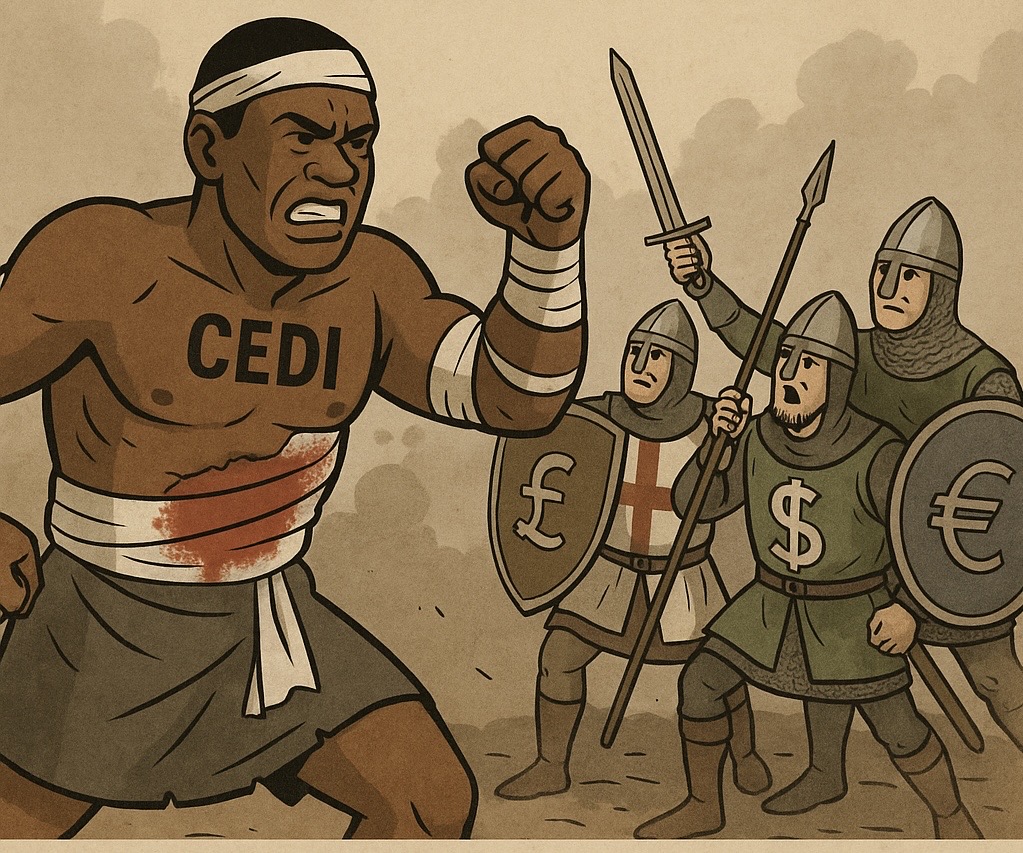
Dollar swung first, a heavy punch from crude oil imports. Cedi staggered. Pound jabbed with spare parts and tuition fees, cracking his ribs. Euro didn’t shout; he suffocated him quietly with wheat, vaccines, and machinery. The crowd gasped as Cedi stumbled, his shield splintered, his armour cracked.

“Hold the line!” the marshal cried. But the line broke. Cedi fell face-first in the dust, groaning, the flag of Agyakrom trampled beneath him.

The people looked at each other in silence. The trotro mate muttered: “So, this is the plan?” A Makola trader shook her head: “Even my tomatoes are ashamed.”

The giants didn’t even boast; they simply stood over him, as if to say: “This is what happens when you enter the ring unprepared.”


Proverb

“Sɛ nsuyire ba a, ɛna yɛhu deɛ ne kodoɔ yɛ papa.”
(When the floods come, we see the quality of the canoe.)


Policy Reflection

When global storms hit – rising oil prices, higher imports, currency shocks – Cedi revealed what had long been hidden: an economy built on weak planks. The canoe had been painted with slogans, but its wood was cracked. Imports outpaced exports, debts outpaced revenues, and buffers were too thin to weather the current.

In the flood of global markets, you do not rise by chanting; you rise by building a canoe that floats.

Read Episode Two

Blog Series, Ghana News, Ghana's Political Economy, Ghanaian Politics, Political Satire & Fiction, Politics, The Bandage Economy

Prologue: The Cedi Vs. The Giants

Long before the drums beat at Agyakrom Arena, the fate of Cedi was already whispered in chop bars, lorry parks, and Parliament corridors.

Cedi was no ordinary fighter. He was born in 1965, young and ambitious, wrapped in national pride like kente on Independence Day. At birth, he carried cocoa in one hand, gold in the other, and oil hidden beneath his skin. His parents promised him glory:
“You will stand tall among the giants. You will not beg; you will command.”

But the world is not a fair marketplace. The giants – DollarPound, and Euro – had been in the ring for centuries, bulging with the muscles of empire, trade, and industry. They had their networks, their soldiers, their standards, their debts. They did not just fight with fists; they fought with memories.

Cedi grew up in this world, always smaller, always hustling. Sometimes he rose with swagger, sometimes he fell with shame. He had seen coups and slogans, IMF infusions and debt write-offs, promises and disappointments. He had been bandaged, boosted, and broken more times than the crowd could count.

Yet the people of Agyakrom never gave up on him. Every election, they dressed him in a new uniform, gave him a new commander, and shouted, “This time, he will conquer!” The crowd’s memory was short, but their hope was long.

The arena itself was merciless. Every import, every school fee, every litre of fuel was another punch. Every cocoa harvest, every gold sale, every donor inflow was another jab back. Victories were rare, defeats were common, but the spectacle never ended.

The elders said:

“Sɛ anomaa anntu a, ɔbuada.”
(If the bird does not fly, it starves.)

Cedi might never soar like Dollar or Pound, but he had to perch somewhere sturdy – or risk falling forever.

This is the story of Cedi: a fighter wounded and revived, mocked and applauded, sprinting on borrowed steroids, and finally learning that his survival depends not on miracles but on habits. It is the story of Ghana’s economy, told in the dust and sweat of a ring where applause is loud but stomachs are louder.

The battle of Cedi is not just about exchange rates; it is about identity, resilience, and the stubborn hope of a people who refuse to stop cheering, even when their pockets are empty.

And so, the drums beat again. The giants tighten their gloves. The medics prepare their syringes. The Old Wise Man sharpens his proverbs. And the crowd leans forward, asking the eternal question:

“Can Cedi stand?”


Click to Read Episode One – The Fall of the Cedi

Agyakrom Blog Series, Ghana News, Ghana's Political Economy, Ghanaian Politics, Political Satire & Fiction, Politics

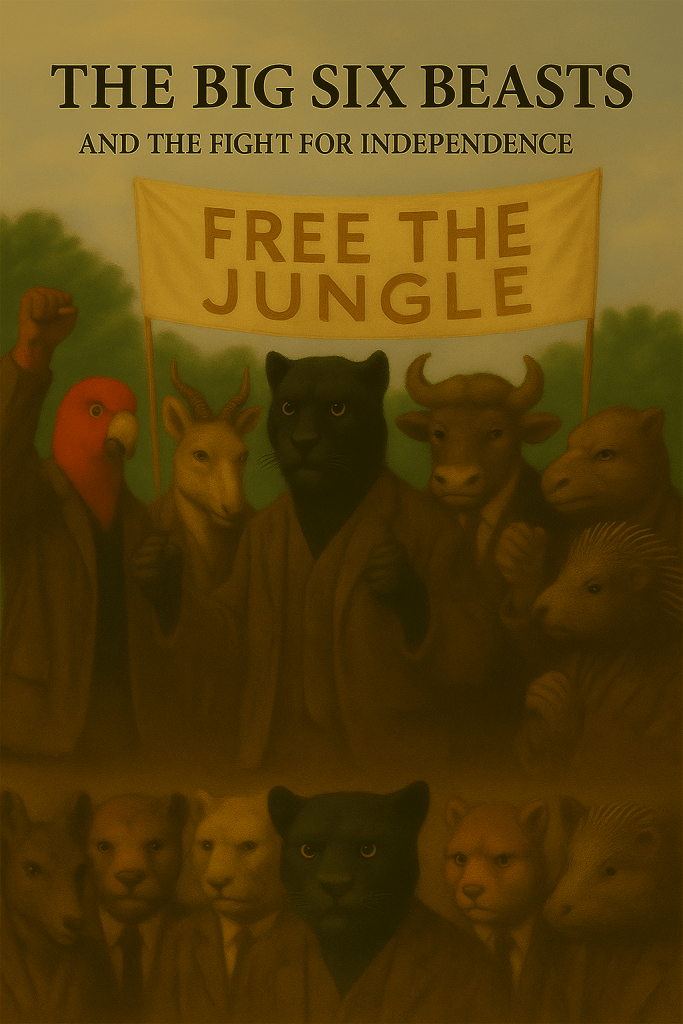
Episode 2: At Long Last… Agyakrom is Free!

“When the drums of freedom beat, even the slowest beast begins to dance.”

By the early 20th century, young beasts in Agyakrom demanded answers. Beasts who read the colonial scrolls and saw the hypocrisy. Beasts who had drunk both palm wine and European philosophy. Beasts who demanded a Free Jungle.

One of them stood tall.

He was fast.
He was fierce.
He was relentless.

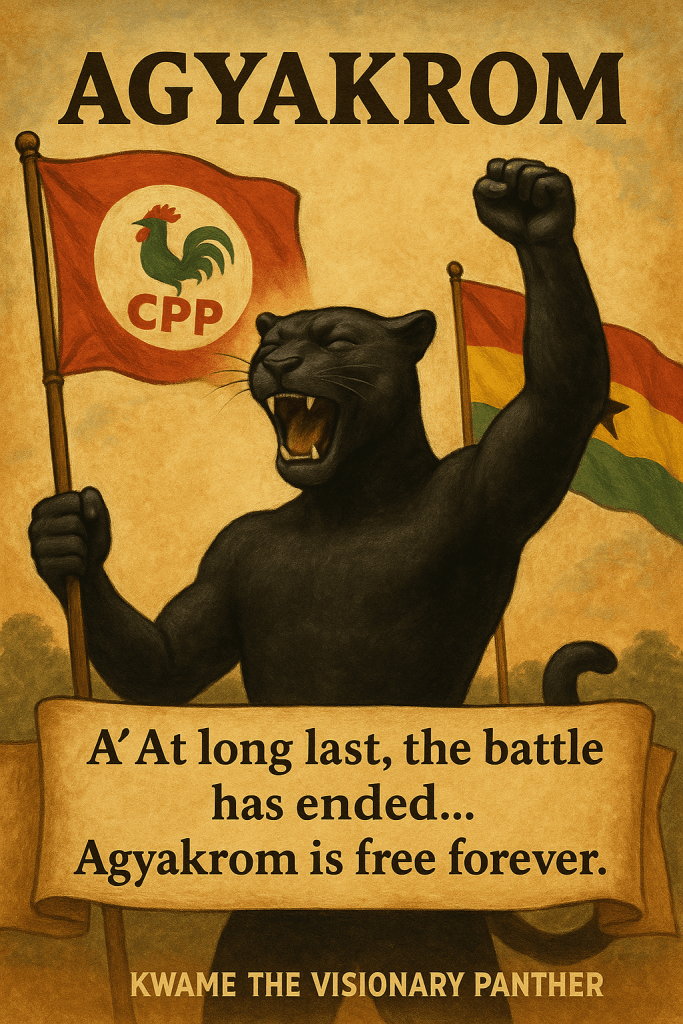
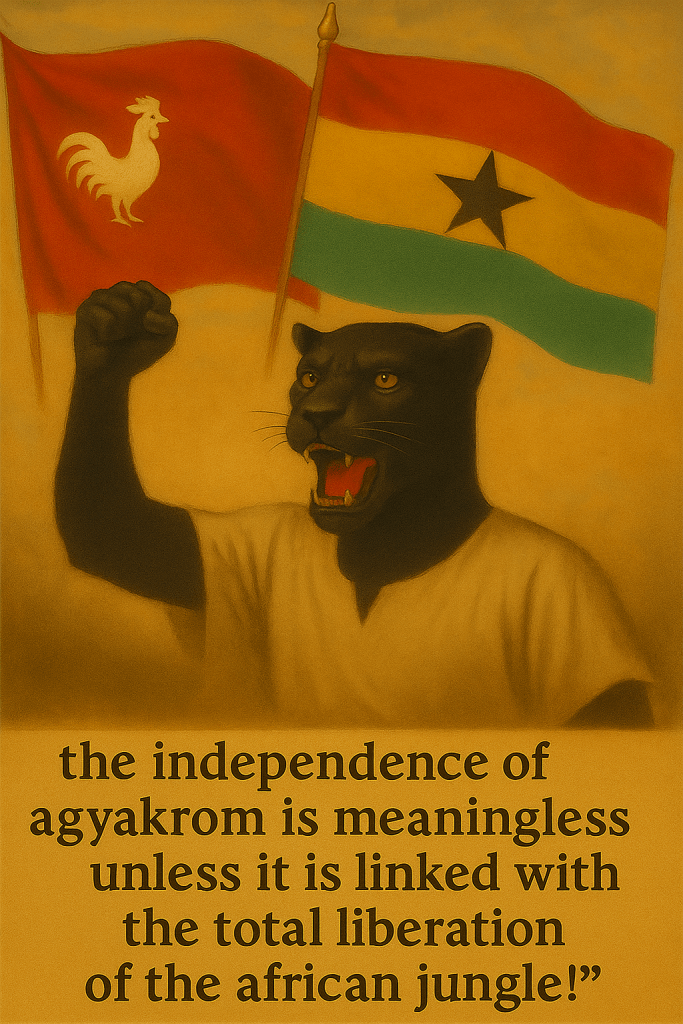
His name? Kwame the Visionary Panther.

Not born into wealth.
Not descended from chieftain trees.
But his speed was unmatched – both in thought and in speech.

He returned from the icy forests of foreign lands with a tail full of socialist theories, a mane full of Pan-African dreams, and a scroll titled “Positive Action.”


The UGCC and the Great Split

Before the Panther returned to Agyakrom, there existed a cautious committee of beasts known as the United Grove for Common Creatures (UGCC). Composed of owls, elder elephants, scholarly squirrels, and coconut-sipping lawyers, this elite circle wanted the colonial zookeeper gone – but politely. Through letters. Through procedures. Through distant petitions and gentlemanly growls.

They needed a spark. A beast with a voice that could rally the groundlings, not just the treehouse elites.

So they summoned the Panther – fresh from foreign groves, fire in his bones, socialism on his breath. Educated in the books of faraway lands, but burning with the fury of local injustice, the Panther spoke not like a bureaucrat, but like a prophet.

At first, he served them dutifully – the UGCC’s roarer-in-chief. But soon, friction brewed. The Panther moved too fast. Dreamed too loud. Called for immediate freedom, while the elders still debated resolutions.

He was bold. They were cautious.

He roared: “Self-rule now! Not next year, not when approved by colonial tail-waggers. Now!”

And so he broke off. He formed his own rebel camp. He built the Crop Protection Party (CPP) – a movement not of parchment and protocol, but of farmers, fisher-beasts, and furious youth.

He mobilised monkeys in the markets, drummers in the bush, cocoa porters, cassava vendors, and even the goats who had never been counted in jungle censuses.

Positive Action and the Beast Awakening

Under the Panther’s call, the jungle stirred. Farmers refused to send cocoa to colonial depots.
Teachers marched out of classrooms. Market mamas sang protest songs at dawn. Young cubs – who once only fetched water and memorised empire poems – began distributing leaflets and climbing platform trees to speak.

The colonial gatherers and zookeepers panicked. They arrested the Panther.

But that only made him a martyr.

While he sat in silence, his name echoed through the vines. His image spread across banana leaflets. His supporters, fierce and loyal, would not rest.

“Free the Panther!”
“The jungle must be ours!”
“Down with the Bulldog Empire!”


The Election That Changed the Jungle

In 1951, the hunters and the gatherers – realising the jungle’s heat could no longer be managed with cold treaties – organised an election.

The Panther ran from his prison cell.

And he won.

Landslide.

The message was clear: the jungle no longer wanted caretakers in suits.

It wanted leaders who ran with the people.


The Independent Jungle

Right from the start, the Panther did not rest. He dreamt big. Lived large. Built fast.

Banana factories. Coconut oil refineries. Cashew trains stretching across canopy corridors. He constructed cocoa processing hubs. He summoned engineers to build the mighty Volta Dam, a monument to modernity that promised power for all. The Black Star shipping fleet roamed the seas.

He didn’t stop at infrastructure. He wrote books. He launched five-year plans. He gave speeches that turned parrots into philosophers and squirrels into citizens.

African beasts across the continent looked to Agyakrom and said: “If they can run free, so can we.”

The Panther became not just a leader, but a symbol.

His dreams were continental. He envisioned a Union of Forest States. He funded liberation struggles in neighbouring groves. He hosted pan-jungle conferences where beasts debated unity in twenty dialects.

To the West, he was dangerous. To the oppressed, he was divine.

He welcomed revolutionaries.
He built a new capital.
He preached unity.

He declared:

“The independence of Agyakrom is meaningless unless it is linked with the total liberation of the African jungle!

But… 

JUNGLE WISDOM OF THE DAY

“When the chains fall off the paws, the mind must still unlearn the leash.”