Blog Series, Ghana's Political Economy, Ghanaian Politics, Political Satire & Fiction, Politics, The Bandage Economy, UK Politics

Episode 3: The Giants and Their Taunts

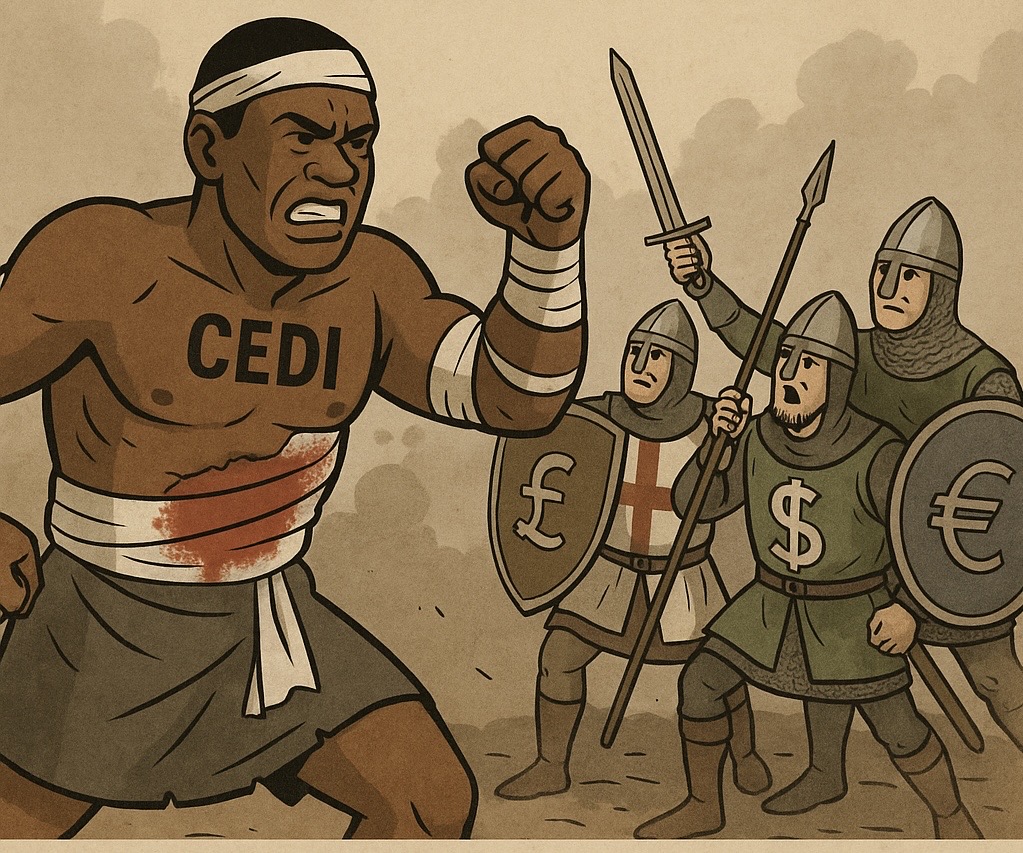
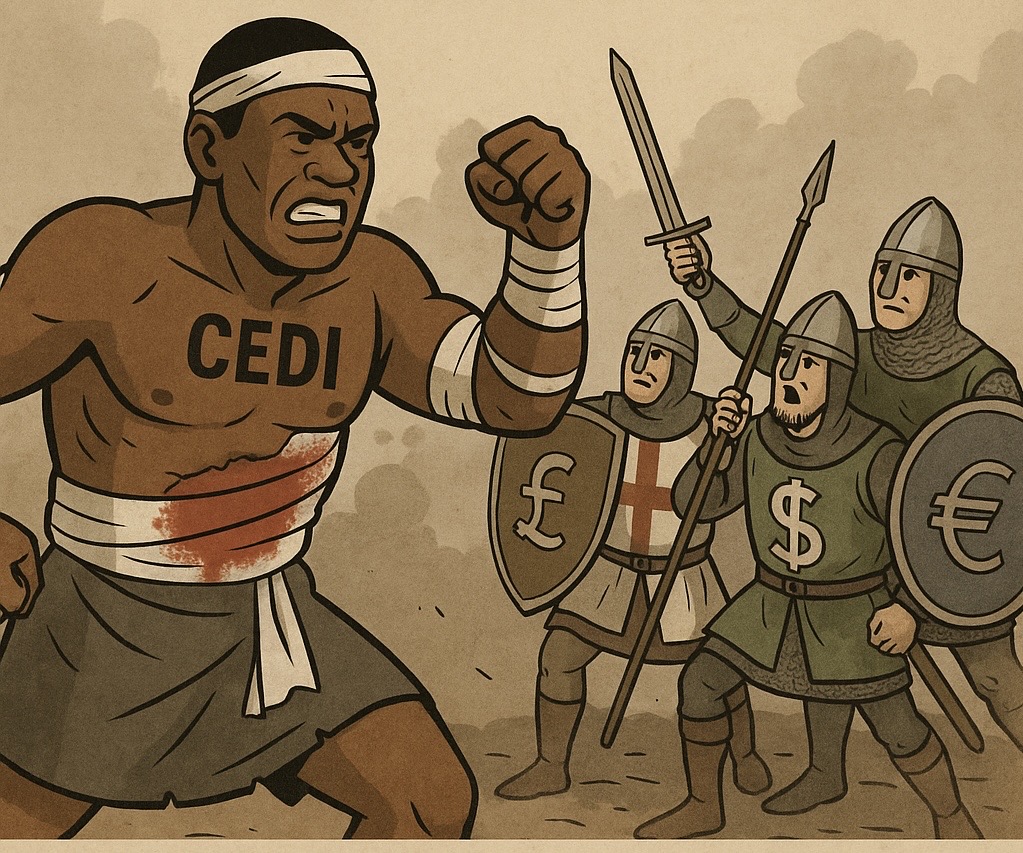
The dust settled for a moment at the Agyakrom Arena. Cedi was on his feet again, swinging punches with a swagger only steroids can buy. The crowd still sang, kelewele still hissed in pans, and trotro mates hung off the stands like drunken griots, whistling victory songs.

But the giants had not retired. They had only been surprised. And when giants recover from surprise, their words weigh heavier than their fists.


With a chest broad as the Atlantic and oil barrels rolling behind him, Dollar spat sand and bellowed:

“Listen, small boy! You think you can beat me with temporary medicine? I am not just a fighter; I am plumbing. Every pipe in your economy flows through me – fuel contracts, global trade, your IMF injections. If your pipes leak, I will flood your house. Fix the pipes, and maybe – just maybe – I will calm down. But keep wasting reserves, and I will return with thunder.”

Cedi clenched his fists, but the ache under the bandage whispered, “He is not lying.”


Adjusting his dusty monocle, Pound cleared his throat like a retired headmaster calling assembly.

“You colonial students never learn. Every September, you run to me with your school fees. Every December, you buy my spare parts for your trotro funerals. Every Easter, you come for my visas, my remittances, my consultants. And then you complain when I tighten your throat? Build skills at home, and I shall stop billing you like a stubborn headteacher. Until then, I remain your examiner, and the pass mark is in sterling.”

Cedi glared, but behind his fury lay memories of parents selling land for tuition abroad. He had no reply.


Euro dusted his stack of papers, each stamped with blue stars. His twenty-seven soldiers stood like clerks behind him, filing invoices.

“You punch me today, but tomorrow your ships will dock at my ports, begging for machinery, medicines, and wheat. You say you can fight me, but can your factories meet my standards? Can your farmers pass my sanitary tests? You depend on my bread, my vaccines, my machines. Until you build your own, you cannot escape my clipboard. Imports due, my friend. Imports are always due.”

Cedi tried to laugh it off, but deep in his gut he remembered: even cocoa beans needed European chocolate factories before they reached their true value.


The people in the stands argued.

Some jeered at the giants:
“Stop bullying our Cedi! Today he is winning. Tomorrow too he will win!”

Others scratched their heads:
“Hmm. Dollar, Pound, and Euro sound arrogant, but are they not speaking truth? If we do not produce, how can we stop them from charging us rent?”

The kelewele seller muttered, “My oil still comes from Dollar’s cousin. Unless we fry with palm oil only, we will keep smelling his kitchen.”


The Old Wise Man listened from his corner, eyes closed, staff tapping the earth like a metronome.

He spoke softly:
“Ɔkɔtɔ nwo anoma.”
(The crab does not give birth to a bird.)

“The Cedi cannot pretend to be what he is not. Steroids make him leap, but they cannot change his bones. If he does not build his own muscles—factories, farms, savings—he will always be dragged back to the mudflats where the crab belongs. A crab cannot fly; it must walk its own way. And if it wishes to fly, it must build wings, not borrow feathers.”

The crowd fell silent. Even the trotro mate stopped whistling.


Policy Reflection — What the Giants’ Taunts Mean

  • Dollar’s taunt = Ghana’s dependence on oil imports, external borrowing, and reserve burn. Without fixing fiscal leaks and building real reserves, Dollar remains the landlord.
  • Pound’s taunt = Education, remittances, spare parts, and consultancy dependence. Heavy outflows to the UK weaken Cedi each year. The solution is building skills, industries, and alternatives at home.
  • Euro’s taunt = Dependency on European standards and imports (machines, medicines, food). Until local industries meet those standards, Euro’s clipboard rules Ghana’s destiny.

Lesson: These “giants” are not just villains – they are mirrors. Their taunts expose the weak ribs of the economy. The crowd may not like the insults, but the insults are data.
Blog Series, Everyday Life, Ghana's Political Economy, Ghanaian Politics, Politics, The Bandage Economy, UK Politics

Episode 2: The Bandage Miracle

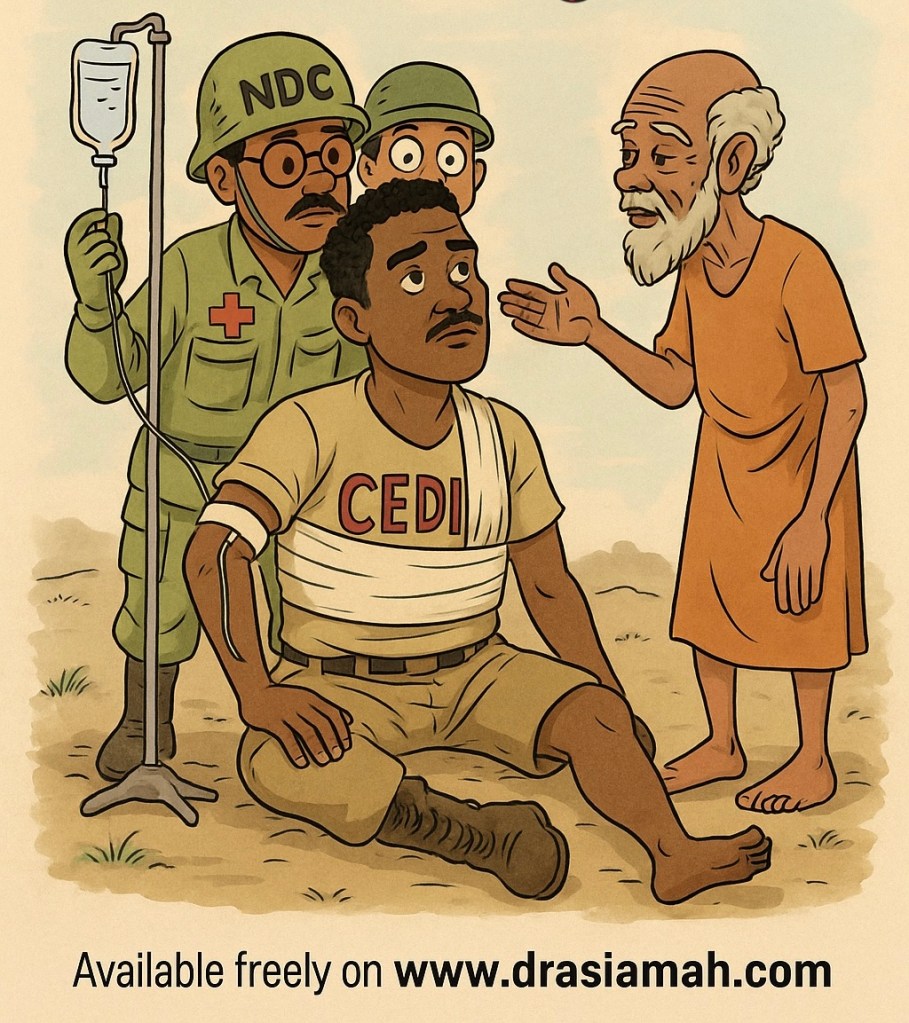
At dawn the sirens wailed and the NDC Brigade arrived – not with sabres but with stethoscopes, calculators, and a trolley that squeaked like a budget line. They found Cedi facedown, chest heaving, eyes cloudy from Dollar’s oil hooks, Pound’s spare‑parts jabs, and Euro’s paperwork chokehold.

“Vitals?” the chief medic asked.

“Pulse erratic. Confidence low. Reserves anaemic. Imports demanding transfusion,” replied the junior medic, thumbing a ledger as if it were a heartbeat monitor.

“Hmm,” the chief said, rolling up their sleeves. “We cannot build a new ribcage on the battlefield, but we can stop the bleeding and get him standing. The crowd needs a fighter, not a eulogy.”

They produced a bandage so wide it could wrap a stadium – tight enough to quiet a scream – and an ampoule labelled Booster (the kind that makes a tired goat chase a Land Cruiser). One jab. Two. A whisper of prayers and policy. The squeaky trolley exhaled.

Cedi twitched.

Another ampoule – this one called Confidence (side effects: swagger, selective hearing, short poems on social media).

Cedi blinked, sat up, spat dust, and – before anyone could recite a fiscal rule – leapt to his feet.

The arena erupted.

“Cedi! Cedi! Cedi!” The kelewele sellers beat ladles on pans; the trotro mates whistled a high‑pitch exchange rate. Even tomatoes – usually stoic – blushed a little.

Cedi tested his limbs like a man fresh from a long dream. He flexed. The bandage hugged his ribs. The Booster burned hymns in his veins. He sprinted.

First, he feinted at Dollar – a quick combination of auctions and attitude. Dollar stumbled, surprised that this same patient was now a pursuer. Then Cedi pirouetted and slapped Pound so neatly that Pound’s monocle somersaulted into the dust. Euro – never theatrical – adjusted his stack of standards but still caught a neat hook that sent three of his smaller allies scrambling for their compliance manuals.

For a moment, even the giants looked… mortal.

“Wonders shall never end!” a trader shouted, waving an invoice like a victory flag.

“See our boy – fresh like new salary!” a teacher laughed, already calculating what his arrears could buy if this miracle held.

From under the bandage, a dull ache cleared its throat. I’m still here, it said. But the drums were louder than pain, and Cedi – full of Confidence – could finally hear himself think louder than the crowd.

He prowled the ring.

Dollar scowled, nursing his jaw. “Enjoy your lap, small boy. Invoices don’t forget.”

Pound retrieved his monocle, breathing like a man who had just remembered colonialism had a returns policy. “Splendid sprint. We shall… reconcile later.”

Euro stacked his papers again – pharma, machinery, wheat – then said, softly: “Imports due is a bell that always rings.”

Cedi only grinned. The Boosters sang revival tunes. He felt strong enough to head‑butt a balance of payments.

Around the ring, Makola Market lifted one eyebrow.

Fuel sniffed. Nice footwork. Do I smell refinery discounts? No? Then I shall remain an elder.
Cement rotated its baggy shoulders. Exchange rate is cousin to my price, not my father.
Tomatoes adjusted their headscarves. We came by truck; truck speaks the language of diesel; diesel does not read hashtags.

Still, the mood was carnival. For a few glorious days, the story was simple: Cedi had fallen; Cedi had risen. The medics were geniuses. The giants had finally been taught manners. The memes were sweet; the thread counts were high.

But in the shade of the scoreboard, two apprentices of the Old Wise Man argued quietly.

“Miracle!” said the first. “Look how fast he runs.”

“Pain management,” said the second. “Look how tight the bandage is.”

They carried their debate to the baobab, where the Old Wise Man was mending a fishing net of proverbs.

“Grandfather,” they said, “is this healing?”

He smiled the patient smile of one who has buried several booms and three busts. “Listen, my children. A man with pepper in his veins can outrun a cheetah—but it is not speed; it is fire. A house painted gold will sparkle in the sun—but knock the wall, and you will meet its mud. If you hush the drum with palm oil, it will play a soft song; when harmattan comes, it will crack all the same.”

They frowned. “So…no miracle?”

“Miracles exist,” he said. “But budgets prefer arithmetic.”

Back in the ring, Cedi continued to dazzle. He threw a flurry at Dollar (call it guided auctions), feinted at Pound (call it administrative tightening), and smiled at Euro through a priority‑imports wink. Each move bought space, time, and – most valuable of all – silence from the panic that ruins weeks in a day.

The chief medic, watching from the corner, scribbled notes:

  • Stabilise the patient: reduce visible volatility; restore breath.
  • Buy time: signal discipline; calm expectations; tidy the rumour mill.
  • Manage the optics: markets eat with their eyes first.

Then, as the sun tilted, the junior medic whispered, “Chief, the vial box…”

“I know,” the chief said.

They both looked at the bandage. Under it, heat gathered like unasked questions.


Proverb of the Day:

“Sɛ wopɛsɛ wo kum aboa a, bɔ ne ti, na ɛnyɛ ne kotodwe.”
(If you intend to bring down an animal, aim for the head, not the knee.)

Meaning: Go for the root cause; don’t only stun the symptoms.


Policy Reflection – What the “Bandage” and “Booster” usually mean

The Bandage Miracle is the toolkit of short‑term forex stabilisation. It is useful – sometimes essential – on a battlefield. But it is not the surgery. Typical “bandage/booster” moves include:

  1. Heavy FX interventions (central bank sells dollars to market): calms spikes but burns reserves if not paired with real fixes.
  2. Forward auctions / tighter FX windows: guides price discovery; squeezes speculation – can also squeeze genuine importers if rationing bites.
  3. Cash‑flow steroids: one‑off inflows (IMF/BOP tranches, syndicated loans, commodity pre‑financing) that fatten reserves quickly – Powerful, but with repayment footprints.
  4. Administrative tightening: documentation checks, surrender requirements, limits on certain outflows—slows leaks; risks pushing demand to side streets.
  5. Interest‑rate signalling & liquidity mops: strengthen the carry to cool demand for foreign currency – helps the rate, but financing costs bite SMEs.
  6. Import prioritisation: channel scarce FX to essentials (fuel, medicines, inputs) – wise triage; also admits we can’t feed every appetite today.

Why it feels like a miracle: expectations flip fast. Fear goes quiet. The rate retreats. Headlines clap. But…

  • Prices don’t fall in a straight line. Inventories were bought at the old rate; fuel taxes and margins exist; transport costs are sticky; wholesalers hedge by memory.
  • Reserves are not rivers. If the surgery (exports, productivity, fiscal diet) doesn’t follow, the bandage wets through.
  • Credibility clocks tick. Markets forgive emergency medicine; they punish addiction.

So yes – stanch the bleeding. Wrap the ribs. Inject composure. But then pick up the scalpel for the real work: trimming deficits, growing exports, adding value at home, building buffers when cocoa smiles and gold winks. The crowd loves a sprint; stability is marathon grammar.

From the baobab, the Old Wise Man’s voice drifted back into the cheering:

Bandage is mercy. Booster is breath. But the head of the animal is the structure: what you make, what you sell, how you spend, how you save. Miss the head, and you will chase the tail until evening.”

Episode One: The Fall of the Cedi

Episode Three: The Giants and Their Taunts

Climate Policy, Energy Policy, Environmental Policy, Sustainability, UK Politics

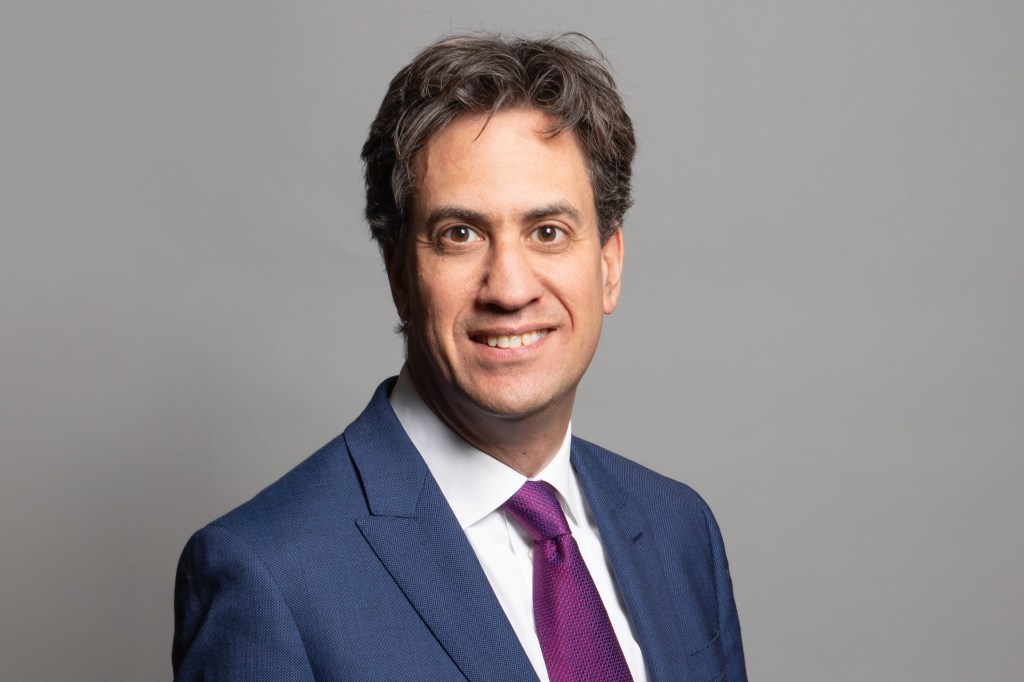
Ed Miliband: Back to Save the Planet… Again?

When Ed Miliband first took the helm of the Department of Energy and Climate Change (DECC) in 2008, the world was a very different place. The iPhone was barely a year old, Barack Obama had just been elected President of the United States, and the idea of UK leaving the EU had not even fertilised to form the “zygote” of Brexit. Fast forward to 2024, and Ed Miliband finds himself once again at the forefront of the UK’s energy policy, now rebranded as the Secretary of State of the Department for Energy Security and Net Zero (DESNZ). The nostalgia is almost palpable, but one has to wonder: is this the dawn of a new era or just a case of déjà vu?

Back in 2008, Miliband was a young, energetic politician with grand visions of a greener future. He championed the Climate Change Act, a groundbreaking piece of legislation that set legally binding targets for reducing carbon emissions. It was a bold move, especially for a country still heavily reliant on fossil fuels. The establishment of the Committee on Climate Change (CCC) was another feather in his cap, designed to hold the government accountable and ensure that these targets were met. These were the days when optimism about combating climate change was high, and the term “clean coal” was bandied about as if it were the holy grail of energy solutions.

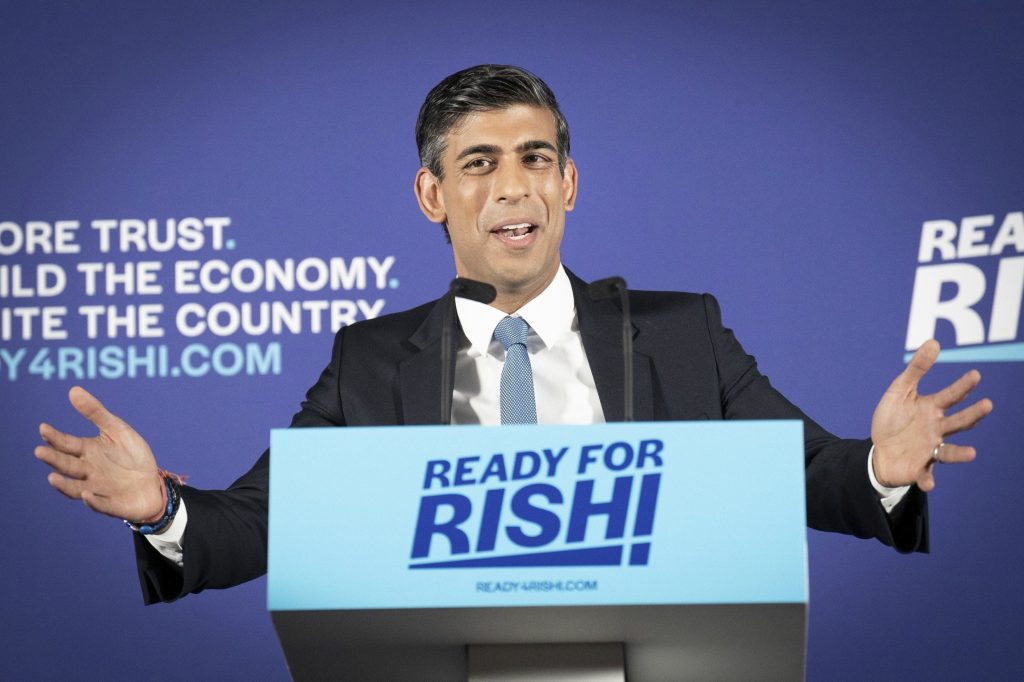
However, as with all grand ideas, reality has a way of intervening. The concept of “clean coal” proved to be more fantasy than fact, and balancing the rhetoric with the harsh realities of implementation became an increasingly Sisyphean task. The subsequent 14 years of Conservative rule saw significant changes in the department’s structure and focus. In 2016, under Prime Minister Theresa May, DECC morphed into the Department for Business, Energy, and Industrial Strategy (BEIS), and under Rishi Sunak’s premiership, it transformed into what we now call DESNZ. This constant rebranding and restructuring might suggest a dynamic, adaptive approach to energy policy, but it also smacks of a lack of long-term vision and consistency.

During the Conservative years, the world witnessed seismic shifts in the energy and environmental landscape. The Paris Agreement of 2015 was a global commitment to tackle climate change, a beacon of hope amidst growing environmental despair. The UK’s net-zero strategy, aimed at eliminating greenhouse gas emissions by 2050, was another ambitious target set amidst an era of increasing environmental awareness. However, these years were also marked by geopolitical tensions, Brexit-induced uncertainties, and energy crises that saw the cost of living skyrocket. It’s against this tumultuous backdrop that Miliband makes his return.

So, what can we expect from Ed Miliband’s second act? Will he be the seasoned statesman who navigates the complexities of modern energy policy with wisdom and foresight, or will he fall back into the idealistic traps of his earlier tenure? One thing is certain: the challenges he faces now are far more complex than those of 2008. The clean coal rhetoric has long been debunked, and the focus has shifted towards more viable renewable energy sources like wind, solar, and nuclear power. But even these come with their own set of challenges, from technological limitations to public opposition.

One of the most pressing issues Miliband will have to address is the ongoing energy crisis. Geopolitical tensions, particularly those involving major oil and gas producing countries, have created a volatile energy market. Prices have soared, contributing to a cost of living crisis that has left many households struggling to pay their bills. Energy security, therefore, is not just about finding sustainable sources; it’s also about ensuring affordability and stability. This delicate balancing act will require more than just idealism; it will demand pragmatic, innovative solutions that can adapt to rapidly changing global dynamics.

Brexit adds another layer of complexity to Miliband’s task. The UK’s departure from the European Union has not only altered its economic landscape but also its environmental policy framework. The EU’s stringent environmental regulations no longer apply, leaving the UK to forge its own path. This could be an opportunity for Miliband to craft a uniquely British approach to energy and climate policy, but it could also lead to regulatory gaps and inconsistencies. Navigating this post-Brexit terrain will require diplomatic finesse and a clear vision of what the UK’s environmental future should look like.

Public opinion will also play a crucial role in Miliband’s tenure. The electorate has shown increasing concern about climate change, but there’s also significant anxiety about the economic implications of stringent environmental policies. Striking the right balance between environmental responsibility and economic viability will be a key test of Miliband’s leadership. Can he convince the public that the sacrifices required for a sustainable future are worth making? Can he ensure that the transition to a greener economy does not leave the most vulnerable behind?

Then there’s the issue of technological innovation. The rapid advancement of renewable energy technologies presents both opportunities and challenges. Investing in research and development will be crucial, but so will be the need to manage the transition from old to new energy infrastructures. This includes not just the physical infrastructure, but also the workforce. Retraining and redeploying workers from traditional energy sectors to new, green jobs will be essential in ensuring a just transition.

Ultimately, the eyes of the nation – and indeed the world – will be on Ed Miliband in the coming months (years). His ability to navigate the complex interplay of environmental, economic, and social factors will determine not just his legacy but also the UK’s trajectory in the fight against climate change. The stakes are high, the challenges immense, but if history has taught us anything, it’s that bold leadership can indeed change the world. Whether Miliband will rise to the occasion or falter under the weight of expectations remains to be seen. One thing is certain: the return of Ed Miliband marks a new chapter in the ongoing saga of the UK’s energy and climate change policy.

Agricultural Policy, Election 2024, Politics, Sustainability, UK Politics

UK Agriculture and the 2024 General Election: Political Dilemmas and Future Implications

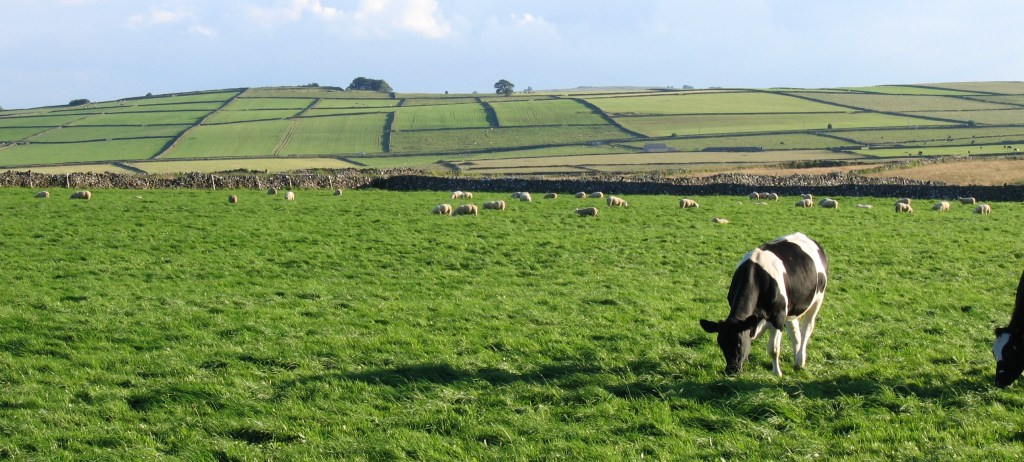
As the UK barrels towards the 2024 general election, the agricultural sector, often the quiet backbone of the nation, finds itself in a peculiar position. Historically overlooked in the glitz and glamour of campaign promises, agriculture now sits awkwardly in the limelight. It’s a sector that doesn’t scream for attention like health or immigration, but without it, we’d all be pretty hungry. So, what do our noble politicians have in store for the farmers who toil the land and, by extension, for the rest of us who benefit from their hard work?

Let’s be honest: agriculture isn’t the sexiest topic on the campaign trail. It’s not going to win over city dwellers preoccupied with the latest tax policies or NHS reform. Yet, agriculture is the thread that ties us all together, whether we realise it or not. Every tax policy, trade agreement, and environmental regulation reverberates through the fields and pastures, affecting what ends up on our dinner tables.

First, let’s talk about the Conservatives. The party that traditionally prides itself on supporting business and industry, but often finds itself in a bit of a pickle when it comes to agriculture. Rishi Sunak’s government has promised to support British farmers, but the specifics are as murky as a ploughed field after a rainstorm. They talk a good game about maintaining high standards for food production and animal welfare, but there’s a catch. They’re also all in for free trade agreements that sometimes prioritise cheaper imports over home-grown produce. The classic Conservative dilemma: to protect or to profit?

Sunak’s stance on agriculture seems to be a balancing act between pandering to rural voters and keeping urbanites happy with low food prices. On one hand, they’re promising subsidies and support for innovative farming practices. On the other, their trade deals with countries like Australia and the US could undercut British farmers. It’s like promising a kid candy, then handing it to his richer, more powerful cousin. Farmers might get some help to innovate, but they’ll also face tougher competition from imports that don’t always meet the same rigorous standards.

Switching gears to Labour, Keir Starmer is trying to paint a brighter future for British agriculture, but not without his own set of contradictions. Labour’s manifesto is big on sustainability and green farming practices, aiming to make British agriculture the poster child for environmental responsibility. Starmer wants to invest heavily in organic farming, reduce pesticide use, and increase biodiversity. It sounds wonderful, doesn’t it? Until you realize that this vision comes with a hefty price tag.

Labour’s green dreams are noble, but they could also mean higher costs for farmers and, consequently, higher prices for consumers. It’s the classic green vs. greenbacks conundrum. How much are we willing to pay for sustainability? And more importantly, how much are farmers willing to change without going bankrupt? Labour promises grants and financial support, but the practicalities of such a transition could make the difference between thriving farms and deserted fields.

Moreover, both parties have to grapple with the implications of Brexit. Yes, the B-word. Brexit has already turned the agricultural sector upside down, shaking up trade routes and supply chains. The Common Agricultural Policy (CAP) of the EU, which provided substantial subsidies to UK farmers, is a thing of the past. The government’s replacement, the Environmental Land Management Scheme (ELMS), is supposed to reward farmers for environmentally friendly practices. It’s a nice idea on paper, but the rollout has been slower than a tractor in first gear.

Under the ELMS, farmers are encouraged to enhance biodiversity, improve water quality, and reduce carbon emissions. However, the transition from the old subsidy system to this new, greener approach has left many farmers uncertain and anxious. The Conservatives assure us that this will ultimately benefit both the environment and the farmers, but the immediate reality feels like asking a marathon runner to switch to high heels halfway through the race.

Adding to the complexity, immigration policy throws another spanner in the works. The agricultural sector heavily relies on seasonal migrant workers, and immigration rules have tightened post-Brexit. Both Labour and the Conservatives acknowledge this issue, but their solutions differ. Labour proposes more flexible immigration rules to ensure farms have the labour they need. The Conservatives, however, focus on automation and mechanization as a long-term solution, a vision that sounds futuristic but may leave farmers struggling in the short term.

In practical terms, let’s take a hypothetical farmer, Mr. Green, who runs a modest dairy farm in Somerset. Under the Conservatives, Mr. Green might receive some support to adopt new technologies, but he’ll also face competition from imported dairy products. He could invest in robotic milkers, but these come with high upfront costs and a steep learning curve. Meanwhile, if Labour takes the helm, Mr. Green might get subsidies to turn his farm organic. However, transitioning to organic farming isn’t just a matter of flipping a switch; it requires time, money, and a market willing to pay premium prices for organic milk.

The crux of the matter is that agriculture is more interconnected with other policies than many care to acknowledge. Economic strategies, trade deals, immigration laws, and environmental policies all converge on the farms across the UK. Yet, the discourse remains fragmented, with agriculture often treated as a peripheral issue rather than a central pillar of policymaking.

Consider the linkage between trade policies and agriculture. A free trade agreement with Australia, which the Conservatives boast about, might reduce tariffs on Australian beef. This could be great for consumers craving cheaper steaks, but what about British beef farmers? They’re suddenly competing with vast Australian ranches where production costs are lower. The impact isn’t just economic; it’s cultural and environmental. British farmers often maintain hedgerows and woodlands, contributing to the rural landscape and biodiversity, practices not necessarily mirrored by their Australian counterparts.

On the immigration front, the seasonal nature of farm labour demands a flexible, reliable workforce. The Conservatives’ push towards automation might seem like a futuristic solution, but machines can’t pick strawberries with the same care and efficiency as human hands. Labour’s approach to ease immigration restrictions for seasonal workers might keep the farms running, but it’s a temporary fix to a deeper issue of workforce stability and rural employment.

Agriculture is also a bellwether for economic health. When farms struggle, rural economies suffer. The decline of small farms leads to the decay of rural communities, loss of local markets, and a disappearance of traditional knowledge and skills. A thriving agricultural sector, supported by coherent policies, not only feeds the nation but also sustains rural life and traditions.

So, as the election looms, what should farmers do? The answer is as complex as the issues they face. Voting isn’t just a matter of picking the party with the shiniest manifesto. It’s about considering the broader implications of each policy and how it intertwines with the practicalities of running a farm. Farmers must weigh the promises against the realities of their daily lives, considering both short-term needs and long-term sustainability.

In the end, the 2024 election might not revolutionise British agriculture, but it will set the tone for the next few years. Whether it’s through better trade deals, sensible immigration policies, or realistic environmental goals, the future of farming hinges on political decisions made today. As politicians jostle for votes, let’s hope they remember the hands that feed the nation. Because without them, all their grand promises will be worth less than a hill of beans.

Election 2024, UK Politics

A Deep Dive into the 2024 UK General Election: What’s at Stake?

As the UK approaches the 2024 general election, the political landscape is charged with a sense of urgency and uncertainty. The choices voters make in this election will not only determine the direction of the country for the next five years but could also have lasting impacts on the nation’s social, economic, and environmental fabric. This election is a critical juncture, laden with complex issues and competing visions for the future.

At the forefront of the debate is the economy, a topic that has dominated political discourse. The Conservatives, led by Prime Minister Rishi Sunak, have focused on tax cuts as a means to stimulate economic growth. Their manifesto promises reductions in income tax and corporation tax, aiming to put more money into the pockets of individuals and businesses. The underlying philosophy is clear: lower taxes will lead to increased spending and investment, thereby boosting the economy. However, this approach has been met with skepticism. Critics argue that tax cuts primarily benefit the wealthy and corporations, widening the gap between rich and poor. The question remains whether this trickle-down approach can truly address the economic challenges faced by ordinary citizens.

On the other hand, the Labour Party, under Keir Starmer, has proposed a more redistributive economic policy. Labour’s focus is on increasing public spending, particularly in health and education, funded by higher taxes on the wealthy and large corporations. Their argument is that by investing in public services and infrastructure, the government can create a more equitable society and sustainable economic growth. This philosophy is rooted in the belief that a strong welfare state is essential for social cohesion and economic stability. However, this approach is not without its critics, who warn that higher taxes could stifle business investment and economic dynamism.

Health care is another pivotal issue in this election. The NHS, long considered a cornerstone of British society, is under immense pressure. The Conservatives have pledged to increase funding and improve efficiency within the NHS, but their track record has been marred by accusations of underfunding and mismanagement. Labour, conversely, has committed to a substantial increase in NHS funding, aiming to reduce waiting times and improve patient care. They also plan to address the staffing crisis by recruiting more health workers and improving their pay and conditions. The practical implications of these policies are significant: while increased funding and recruitment are urgently needed, the source of this funding and its long-term sustainability remain contentious.

Immigration has emerged as one of the most hotly debated topics in this election. The UK has seen a sharp rise in both legal and illegal immigration, leading to polarised opinions on how to manage this influx. The Conservatives have taken a hardline stance, advocating for stricter controls and the controversial Rwanda Bill, which aims to deport illegal immigrants to Rwanda. This policy has been criticised as inhumane and impractical, with opponents arguing that it fails to address the root causes of immigration and asylum seeking. Labour has taken a different approach, proposing to scrap the Rwanda Bill and instead focus on returning illegal immigrants to their home countries. They also advocate for a more compassionate and efficient asylum system, as well as a cap on legal migration. This pragmatic stance aims to balance the need for immigration control with the recognition of the UK’s humanitarian responsibilities.

The environment, once a prominent issue in British politics, appears to have taken a back seat in this election. Both major parties have been criticised for their lack of ambitious environmental policies. The Conservatives have issued new oil licenses, signaling a continued reliance on fossil fuels, while Labour has abandoned its £28 billion investment pledge for a green transition. This retreat from environmental commitments is alarming in the context of the global climate crisis. Practical examples of the consequences of such neglect are evident in the increasing frequency of extreme weather events, which have devastating impacts on communities and economies alike.

A close examination of the manifestoes of the major parties reveals stark differences in their visions for the future. The Conservatives’ manifesto emphasizes economic growth through deregulation and tax cuts, with a focus on traditional industries such as finance and fossil fuels. Their policies are geared towards maintaining the status quo and supporting established economic structures. Labour’s manifesto, in contrast, is more progressive, with a strong emphasis on social justice and public investment. They advocate for a transition to a green economy, improved public services, and a fairer distribution of wealth.

The interplay between these themes – economy, health, immigration, and the environment – reflects broader ideological divides. The Conservatives’ approach is grounded in neoliberal principles, prioritising market solutions and individual responsibility. Labour, on the other hand, champions a more collectivist vision, emphasizing the role of the state in ensuring social welfare and environmental sustainability. These philosophical differences are not merely abstract; they have concrete implications for policy and governance.

A critical question arises: has the economy taken precedence over all other issues in this election? There is a strong argument to be made that it has. Economic policies are at the forefront of both parties’ campaigns, and the discourse around tax cuts, public spending, and fiscal responsibility dominates the political narrative. This focus is understandable given the economic challenges the UK faces, including inflation, stagnant wages, and rising living costs. However, the prioritisation of economic issues can lead to the marginalisation of other crucial areas, such as health care and the environment, which are inextricably linked to economic well-being.

In practical terms, the policies proposed by both parties must be evaluated not just on their ideological merits, but also on their feasibility and potential impact. For instance, tax cuts proposed by the Conservatives need to be scrutinised for their long-term fiscal sustainability and their actual effect on economic inequality. Similarly, Labour’s ambitious plans for public investment must be assessed for their practical implementation and funding mechanisms.

As voters head to the polls, they must navigate this complex landscape of competing visions and promises. The 2024 election is not just about choosing a government for the next five years; it is about setting the course for the future of the UK. The choices made will reflect broader societal values and priorities – whether the focus is on economic growth at any cost, a commitment to social justice and public welfare, or a balanced approach that integrates economic, social, and environmental considerations.

Ultimately, this election is a test of the UK’s democratic values and the responsiveness of its political system to the needs and aspirations of its citizens. It is a moment of critical reflection on the kind of society the UK wants to be and the legacy it wishes to leave for future generations. As such, every vote cast is not just a choice between parties and policies, but a statement of belief in a particular vision of the future. The stakes could not be higher, and the responsibility could not be greater.