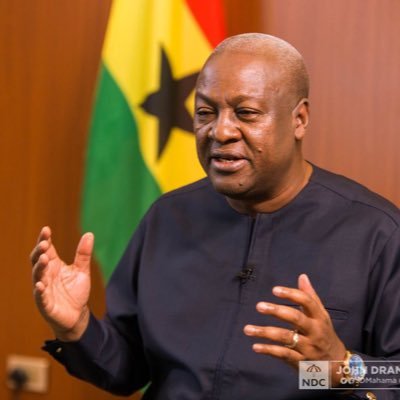
In the annals of Ghana’s political history, the name John Dramani Mahama evokes a sense of paradox. His presidency from 2012 to 2016 was marked by a duality that encapsulates the essence of leadership and its trials. On one hand, Mahama’s tenure was a period of significant infrastructural achievements, a testament to his vision for a modernised Ghana. On the other, the spectre of “dumsor” (persistent power outages) and subsequent economic hardships overshadowed his accomplishments, casting a long shadow over his political legacy. As the 2024 elections approach, Mahama stands at the crossroads of redemption, seeking to leverage his infrastructural feats to reclaim the mantle of leadership.
Mahama’s presidency began with a promise of transformation. Infrastructure became the cornerstone of his administration, with a vision to develop roads, hospitals, schools, and energy projects. Under his leadership, Ghana witnessed the construction of several key infrastructures, including the Ridge Hospital, the University of Ghana Medical Center, and numerous road networks. These projects were not mere facades of progress; they were critical developments aimed at enhancing the nation’s capacity and service delivery. For instance, the Ridge Hospital was upgraded to a state-of-the-art facility, providing much-needed healthcare services to a growing population. The construction of Terminal 3 at the Kotoka International Airport, the expansion of the Tema Port and the construction of the Kwame Nkrumah Interchange further illustrated Mahama’s commitment to infrastructure as the backbone of economic growth.
However, Mahama’s infrastructural achievements were significantly marred by the persistent and severe power outages, known locally as “dumsor,” which plagued Ghana during his presidency. Dumsor became a daily reality for many Ghanaians, affecting households, businesses, and the overall economy. The energy crisis was not merely an inconvenience; it had profound implications for industrial production, small businesses, and the quality of life of ordinary citizens. Industries faced increased production costs due to reliance on alternative power sources, and many small businesses were forced to close, unable to cope with the frequent and prolonged power cuts. This period of darkness, both literal and metaphorical, overshadowed Mahama’s infrastructural strides and became a symbol of his administration’s perceived incompetence.
Economically, Mahama’s tenure was further complicated by a downturn that exacerbated public discontent. High inflation rates, a depreciating currency, and rising unemployment painted a grim picture of the Ghanaian economy. The fiscal deficit ballooned, and public debt soared, leading to an International Monetary Fund (IMF) bailout in 2015. For many Ghanaians, these economic hardships were a direct result of poor governance and mismanagement, fueling a narrative of incompetence that Mahama’s opponents were quick to exploit. This economic narrative, combined with the energy crisis, created a powerful and negative perception that proved difficult to shake off.
In the 2016 elections, Mahama faced a resounding defeat to Nana Akufo-Addo of the New Patriotic Party (NPP). Akufo-Addo’s campaign capitalised on the electorate’s frustration with the economic and energy crises, promising a new dawn of prosperity and stability. The NPP’s victory was seen as a referendum on Mahama’s presidency, with many voters rejecting what they perceived as a legacy of failure. Despite this, Mahama remained a significant figure in Ghanaian politics, continuing to influence discourse and policy within the National Democratic Congress (NDC).
The 2020 elections offered Mahama a chance at redemption. Running once more against Akufo-Addo, Mahama campaigned on his record of infrastructure while promising to rectify past mistakes. The election was fiercely contested, but Mahama ultimately fell short, losing narrowly. The result, however, indicated that a substantial portion of the electorate still resonated with his message and recognized his efforts in nation-building. This close contest set the stage for the 2024 elections, where Mahama seeks to leverage his infrastructural legacy as a key component of his comeback strategy.
Mahama’s vision for a 24-hour economy is central to his 2024 campaign. This ambitious plan aims to transform Ghana into a nation that never sleeps, with continuous economic activities around the clock. The idea is to boost productivity, create jobs, and stimulate economic growth by maximising the use of time and resources. Mahama argues that a 24-hour economy would attract investments, improve public services, and enhance the quality of life for Ghanaians. The concept, while appealing in its potential to revolutionize the economy, faces significant challenges in implementation. It requires substantial improvements in infrastructure, security, and labour regulations to ensure that the workforce is protected and that the necessary services are available around the clock.
Critics, however, remain sceptical of Mahama’s ability to deliver on such grand promises. They point to his previous tenure, where despite notable infrastructural developments, the economy suffered. They argue that the issues of dumsor and economic mismanagement could resurface, undermining the feasibility of a 24-hour economy. Moreover, the nickname “Mahama the Incompetent,” coined by his opponents, continues to linger, serving as a reminder of the challenges he faced during his presidency. Overcoming this negative perception is a significant hurdle for Mahama as he seeks to regain the trust of the electorate.
To counter these criticisms, Mahama has focused on presenting a detailed and pragmatic plan for his 24-hour economy vision. He emphasises the importance of reliable energy supply, improved transportation networks, and enhanced security measures. Mahama argues that his previous infrastructural projects laid the groundwork for this transformation and that lessons learned from past mistakes will guide his approach. He highlights successful 24-hour economies in other countries as models, suggesting that Ghana can adapt similar strategies to its unique context.
Furthermore, Mahama has sought to address the economic concerns by proposing measures to stabilise the economy and promote growth. These include fiscal discipline, investment in key sectors such as agriculture and manufacturing, and initiatives to support small and medium-sized enterprises. Mahama’s campaign also focuses on social policies aimed at reducing poverty, improving education, and expanding healthcare services. By presenting a comprehensive and multifaceted approach, Mahama aims to convince voters that he has the vision and capability to lead Ghana towards a brighter future.
The challenge for Mahama, however, lies not only in articulating his vision but also in convincing a sceptical electorate that he can deliver on his promises. The memory of dumsor and economic hardship remains fresh in the minds of many Ghanaians. Overcoming this scepticism requires a combination of effective communication, concrete policy proposals, and a demonstration of competence and leadership. Mahama’s ability to connect with voters on a personal level, addressing their concerns and aspirations, will be crucial in his campaign.
 Dr. Asiamah's Gazette