Agyakrom Blog Series, Ghana News, Ghana's Political Economy, Ghanaian Politics, Political Satire & Fiction, Politics

Episode 2: At Long Last… Agyakrom is Free!

“When the drums of freedom beat, even the slowest beast begins to dance.”
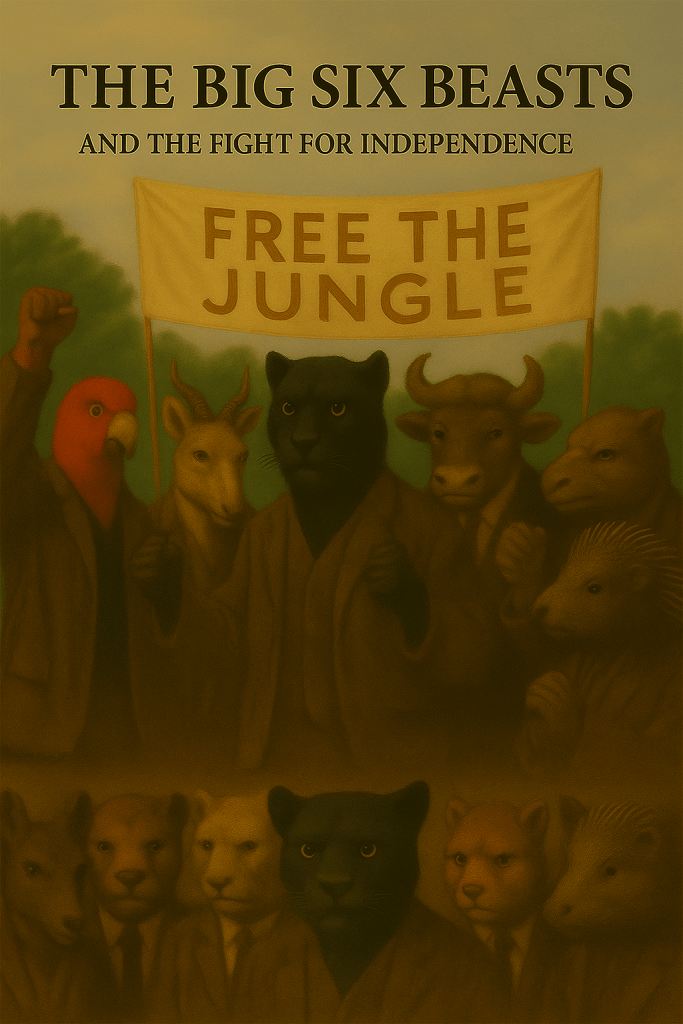
By the early 20th century, young beasts in Agyakrom demanded answers. Beasts who read the colonial scrolls and saw the hypocrisy. Beasts who had drunk both palm wine and European philosophy. Beasts who demanded a Free Jungle.

One of them stood tall.

He was fast.
He was fierce.
He was relentless.

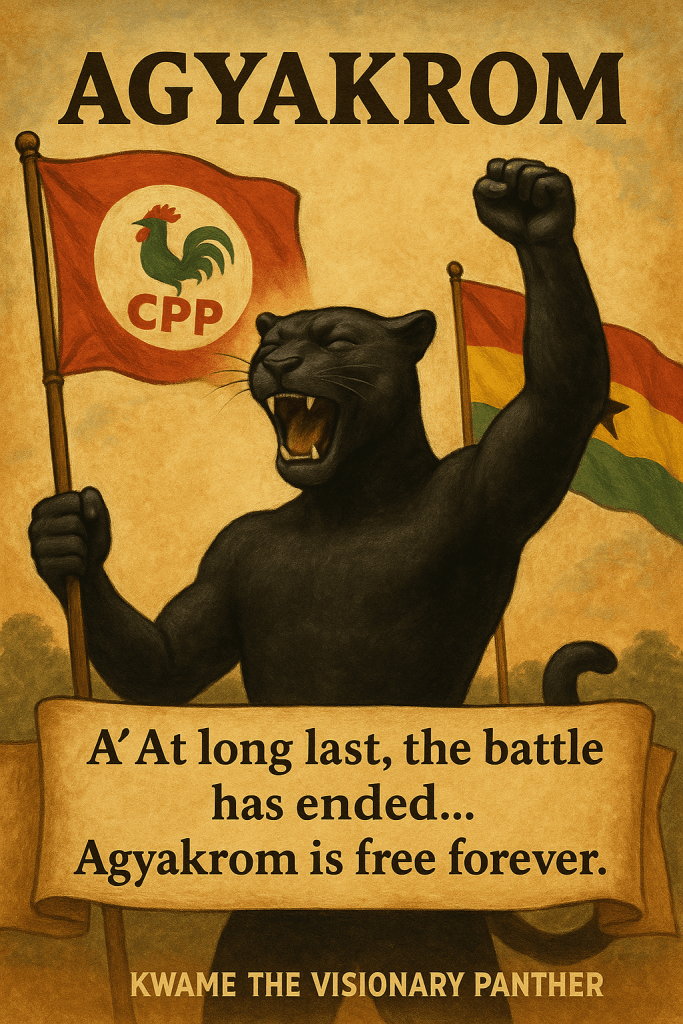
His name? Kwame the Visionary Panther.

Not born into wealth.
Not descended from chieftain trees.
But his speed was unmatched – both in thought and in speech.

He returned from the icy forests of foreign lands with a tail full of socialist theories, a mane full of Pan-African dreams, and a scroll titled “Positive Action.”


The UGCC and the Great Split
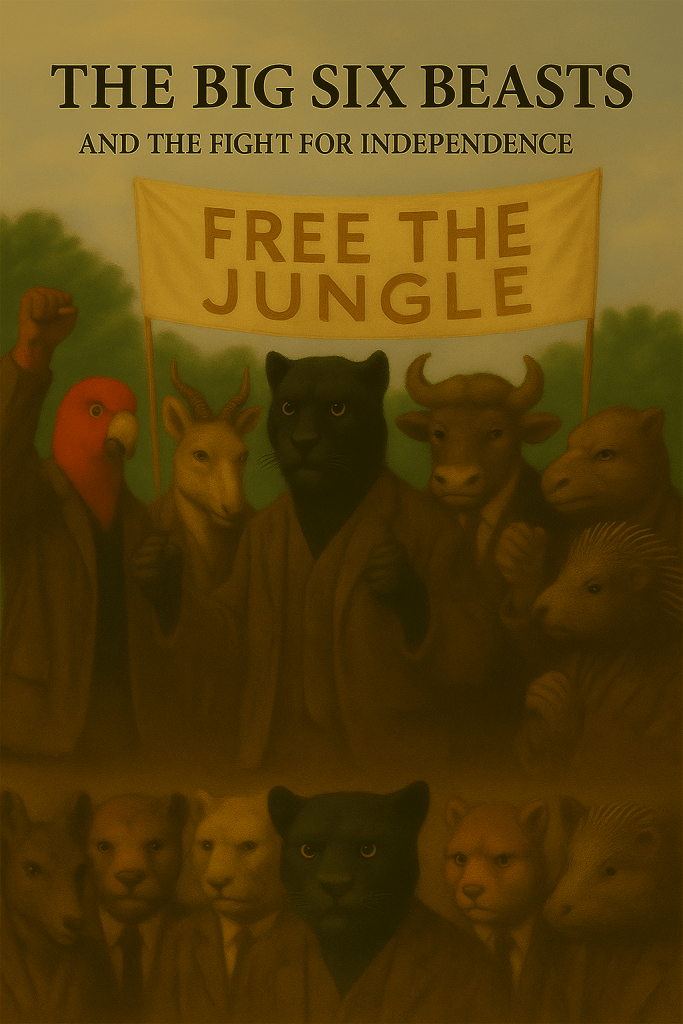
Before the Panther returned to Agyakrom, there existed a cautious committee of beasts known as the United Grove for Common Creatures (UGCC). Composed of owls, elder elephants, scholarly squirrels, and coconut-sipping lawyers, this elite circle wanted the colonial zookeeper gone – but politely. Through letters. Through procedures. Through distant petitions and gentlemanly growls.

They needed a spark. A beast with a voice that could rally the groundlings, not just the treehouse elites.

So they summoned the Panther – fresh from foreign groves, fire in his bones, socialism on his breath. Educated in the books of faraway lands, but burning with the fury of local injustice, the Panther spoke not like a bureaucrat, but like a prophet.

At first, he served them dutifully – the UGCC’s roarer-in-chief. But soon, friction brewed. The Panther moved too fast. Dreamed too loud. Called for immediate freedom, while the elders still debated resolutions.

He was bold. They were cautious.

He roared: “Self-rule now! Not next year, not when approved by colonial tail-waggers. Now!”

And so he broke off. He formed his own rebel camp. He built the Crop Protection Party (CPP) – a movement not of parchment and protocol, but of farmers, fisher-beasts, and furious youth.

He mobilised monkeys in the markets, drummers in the bush, cocoa porters, cassava vendors, and even the goats who had never been counted in jungle censuses.

Positive Action and the Beast Awakening

Under the Panther’s call, the jungle stirred. Farmers refused to send cocoa to colonial depots.
Teachers marched out of classrooms. Market mamas sang protest songs at dawn. Young cubs – who once only fetched water and memorised empire poems – began distributing leaflets and climbing platform trees to speak.

The colonial gatherers and zookeepers panicked. They arrested the Panther.

But that only made him a martyr.

While he sat in silence, his name echoed through the vines. His image spread across banana leaflets. His supporters, fierce and loyal, would not rest.

“Free the Panther!”
“The jungle must be ours!”
“Down with the Bulldog Empire!”


The Election That Changed the Jungle

In 1951, the hunters and the gatherers – realising the jungle’s heat could no longer be managed with cold treaties – organised an election.

The Panther ran from his prison cell.

And he won.

Landslide.

The message was clear: the jungle no longer wanted caretakers in suits.

It wanted leaders who ran with the people.


The Independent Jungle

Right from the start, the Panther did not rest. He dreamt big. Lived large. Built fast.

Banana factories. Coconut oil refineries. Cashew trains stretching across canopy corridors. He constructed cocoa processing hubs. He summoned engineers to build the mighty Volta Dam, a monument to modernity that promised power for all. The Black Star shipping fleet roamed the seas.

He didn’t stop at infrastructure. He wrote books. He launched five-year plans. He gave speeches that turned parrots into philosophers and squirrels into citizens.

African beasts across the continent looked to Agyakrom and said: “If they can run free, so can we.”

The Panther became not just a leader, but a symbol.

His dreams were continental. He envisioned a Union of Forest States. He funded liberation struggles in neighbouring groves. He hosted pan-jungle conferences where beasts debated unity in twenty dialects.

To the West, he was dangerous. To the oppressed, he was divine.

He welcomed revolutionaries.
He built a new capital.
He preached unity.
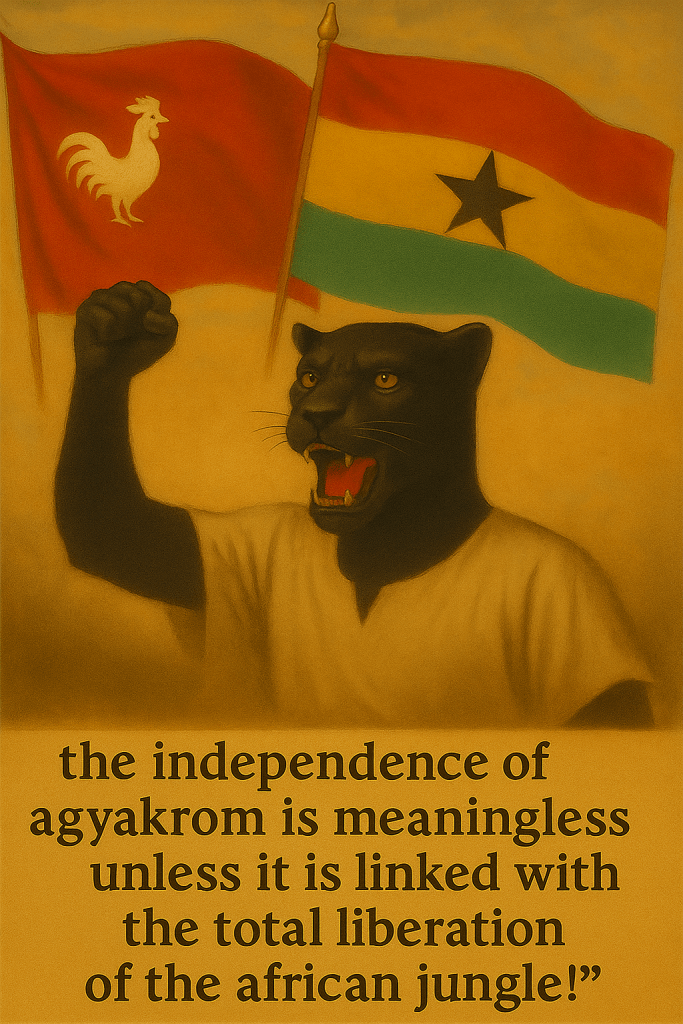
He declared:

“The independence of Agyakrom is meaningless unless it is linked with the total liberation of the African jungle!

But… 

JUNGLE WISDOM OF THE DAY

“When the chains fall off the paws, the mind must still unlearn the leash.”
Ghana News, Ghana's Political Economy, Ghanaian Politics, Politics, Uncategorised

Episode 1: In the Beginning… There Was a Jungle

Every jungle has a history. But not every beast remembers.

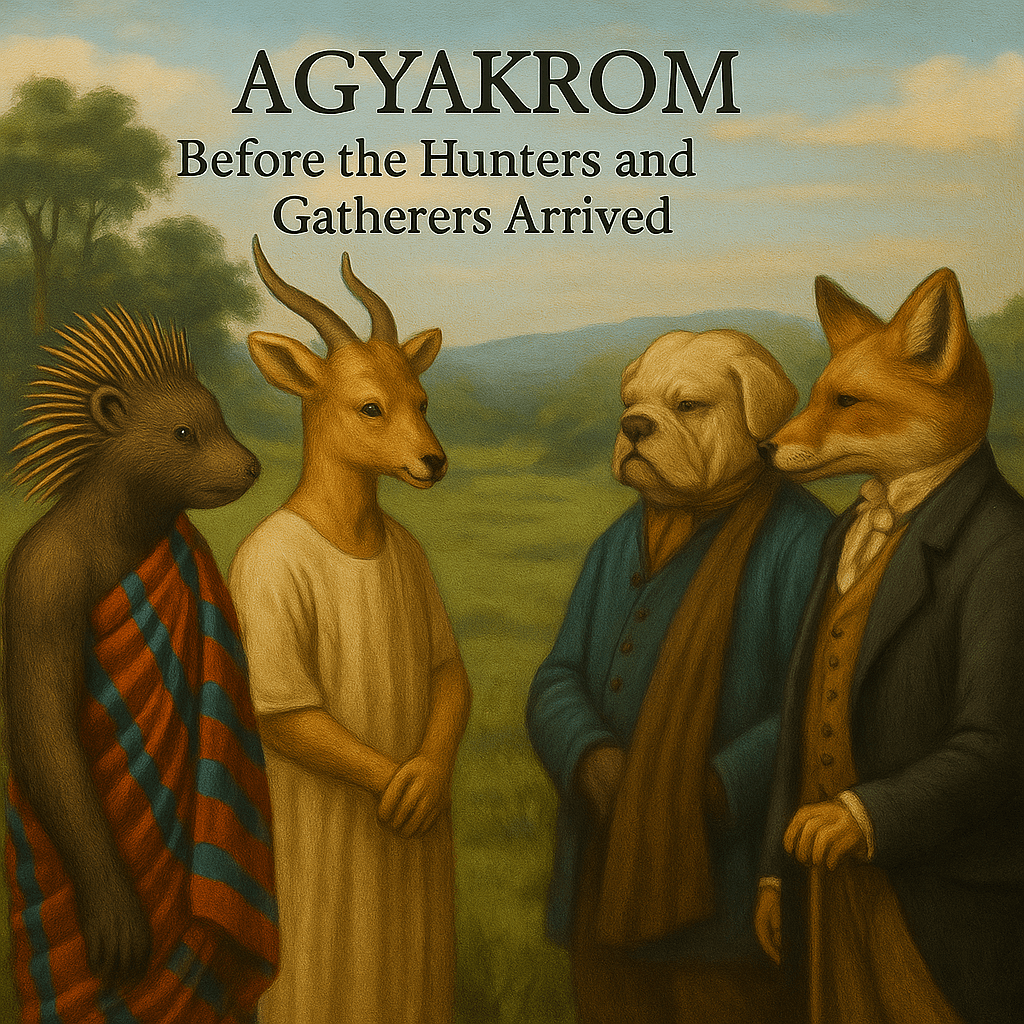
Long before thrones, ballots, slogans, and scandals, there was a vast land in the western belly of the African continent – a place of gold, rivers, thick forests, and proud beasts.

They called it Agyakrom.

It was not yet a republic.

It was not yet even a country.

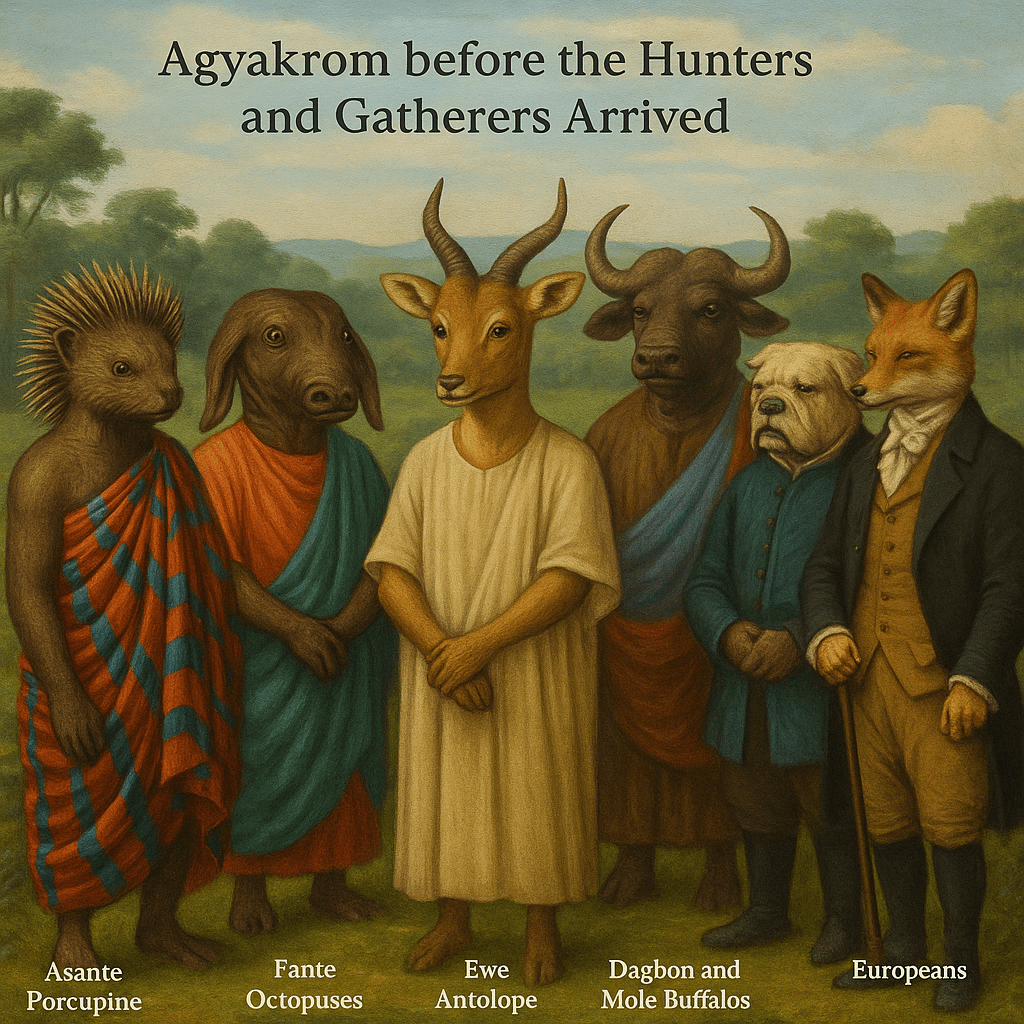
It was a patchwork of powerful animal clans – Asante Porcupines, Ewe Antelopes, Mole-Dagbani Buffalos, Fante Octopuses, Ga jackals, and many more – each with their own kings, traditions, markets, shrines, and seasonal drumbeats.

They lived not in utopia, but in order.

The rivers flowed with rhythm.

The forests echoed with proverbs.

The elders ruled with stools, not scrolls.

And then – the hunters came.

The Coming of the Hunters and Gatherers

No one knows exactly when the first Hunter ship hit the shores. But the river whispers tell of the time when strange, light-skinned creatures – two-legged, clothed in iron and greed – arrived with crosses, coins, and chains.

They came bearing gifts: mirrors, rum, muskets, and the Holy Scroll.

But beneath their cloaks were ledgers.

The jungle called them The Gatherers.

Because that’s what they did.

They gathered:

                  •               Gold from the Lion caves,

                  •               Ivory from the forest bones,

                  •               Palm oil from the Monkey Groves,

                  •               And worst of all, beasts themselves – from the weakest cubs to the strongest buffaloes.

They said they had come to civilise.

But civilisation came with shackles.

For over three hundred rainy seasons, Agyakrom watched its children carried across oceans.

And when the chains were finally lifted, the Gatherers returned – not with whips, but with Rule.

The Jungle Becomes a Colony

They called it a protectorate.

Then a colony.

Then a gold coast – not because of the coast, but because of the gold.

They drew borders like scratch marks on a termite map.

They made laws in languages no beast spoke.

They crowned chiefs they could control.

They introduced currency, courts, and new religion – leaving confusion and conversion in equal measure.

The Jungle Parliament? Replaced by District Commissions.

The beast customs? Replaced by colonial codes.

The jungle’s soul? Traded for infrastructure and flags.

Agyakrom, the free land of many tribes, became a colony.

And the beasts began to forget they were once sovereign.

But as every wise monkey knows:

You can cage a lion, but you cannot silence the growl forever.

The Rise of the Roaring Beasts

By the early 20th century, the jungle began to stir.

Young beasts – some educated abroad, some trained in the colonial classrooms, others shaped by the fireside wisdom of their elders – began to ask dangerous questions.

“Why must we fetch water for their baths while our rivers run dry?”

“Why must our cocoa feed their children, but not ours?”

The great independence struggle was born.

JUNGLE WISDOM OF THE DAY

A Beast that forgets where it came from will never know where it is going

Watch Out for Episode 2: The Struggle for Independence

Everyday Life, Ghana News, Ghana's Political Economy

Despite Just Built a Car Museum. Now What?

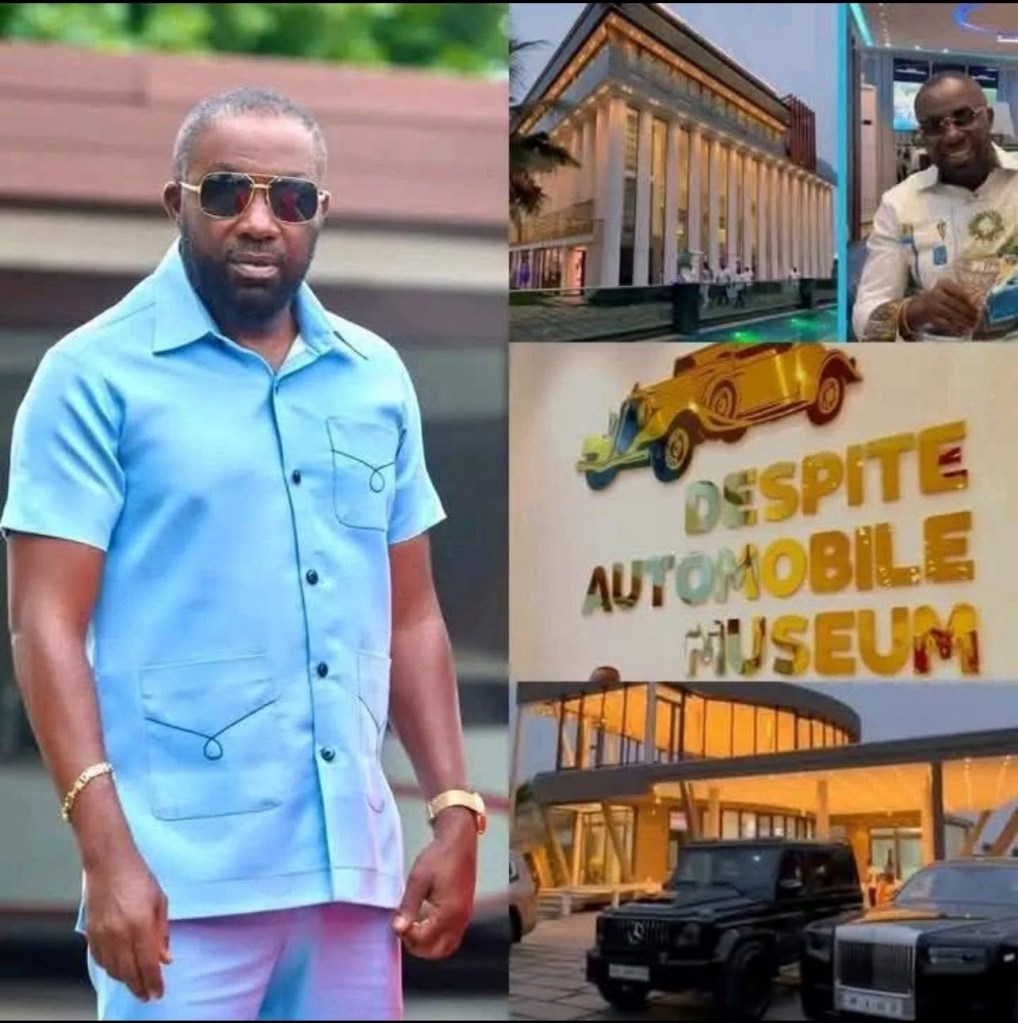
Over the weekend, something rather cinematic happened in East Legon. The Ghanaian business mogul, Mr. Osei Kwame Despite, unveiled his latest addition to Ghana’s luxury landscape — an automobile museum. No, not another car showroom or a flashy garage. A whole museum. A place dedicated to celebrating the aesthetics, engineering, and history of automobiles. In Ghana.

The ceremony? Nothing short of regal. Chaired by Otumfuo Osei Tutu II himself — yes, the Asantehene, in all his royal resplendence. Add to the guest list a political potpourri: General Mosquito (Asiedu Nketia) looking surprisingly like someone who wouldn’t mind a vintage Mustang, Ibrahim Mahama in his usual art-meets-capitalist-cool vibe, and of course, the ever-enigmatic Cheddar (Freedom Jacob Caesar) whose mere presence screams, “I, too, own a Bugatti… or two.”

And yet, while social media bathed in the gloss of Benzes and Bentleys, a deeper conversation stirred underneath the surface.

Do We Really Need This?

Some Ghanaians are side-eyeing the entire affair. “An automobile museum? In this economy?” they ask. When roads in rural districts are more pothole than pavement, when ambulance services struggle for maintenance funding, and when public schools lack desks, a monument to luxury cars feels… somewhat tone-deaf.

Critics argue this is yet another example of Ghanaian elite priorities being wildly out of sync with national development needs. What symbolic value does a museum of foreign-engineered machines offer to a country still grappling with import dependency and a weak manufacturing base? Why not a STEM centre? A vocational training hub? A transport innovation lab?

But… It’s His Money

Then there’s the “but it’s his money” camp. And to be fair, they’re not wrong. Despite is a self-made man. His rise from cassette seller to business magnate is the stuff of Ghanaian legend. If he chooses to immortalise his love for cars in a museum, who are we to police his passion?

Private citizens have always influenced public culture — think of Kwame Nkrumah and his ideological monuments, or even Ibrahim Mahama’s Red Clay Studio. In that light, the Despite Automobile Museum can be seen not merely as vanity but as cultural contribution. A Ghanaian version of Jay Leno’s garage — aspirational, curated, uniquely personal.

Some even see it as a tourism opportunity. “If we can charge dollars to see old colonial forts, why not charge to see Rolls Royces?” one supporter quipped on X (formerly Twitter). And there’s merit to that. Heritage isn’t only in artefacts from 1821; it can also be in the artefacts of aspiration, the dreams of a people on wheels.

The Bigger Picture

This event — like much of what passes as national conversation in Ghana — isn’t really about cars. It’s about the distribution of value in society. What do we celebrate? What do we preserve? Who gets to decide what is “important”? In a country where “education is the key” but “money is the padlock,” the symbolism of a luxury car museum hits a nerve.

So, yes, Despite has every right to build whatever he wants. But Ghanaians also have every right to ask what such projects say about the state of our collective imagination.

Is the Automobile Museum a symbol of ambition? A shrine to consumerism? A call for modern preservation? Or just a rich man flexing with polished chrome?

The truth is probably somewhere in between.

Final Thoughts

In a country where history is often left to rot, where libraries are underfunded and museums are ghost towns, the very idea that a museum could spark national debate is a kind of progress. Even if it’s a museum of Ferraris and Phantoms.

Let’s just hope that while we preserve the past in polished engines, we also invest in the future — in classrooms, clinics, and communities that might one day produce the engineers who build our own dream cars.

For me, I’ll just sip my sobolo and wait for the day someone opens a Public Sanitation Museum. Complete with a VR experience of using a public toilet in Nima during flood season. Now that would be realism.