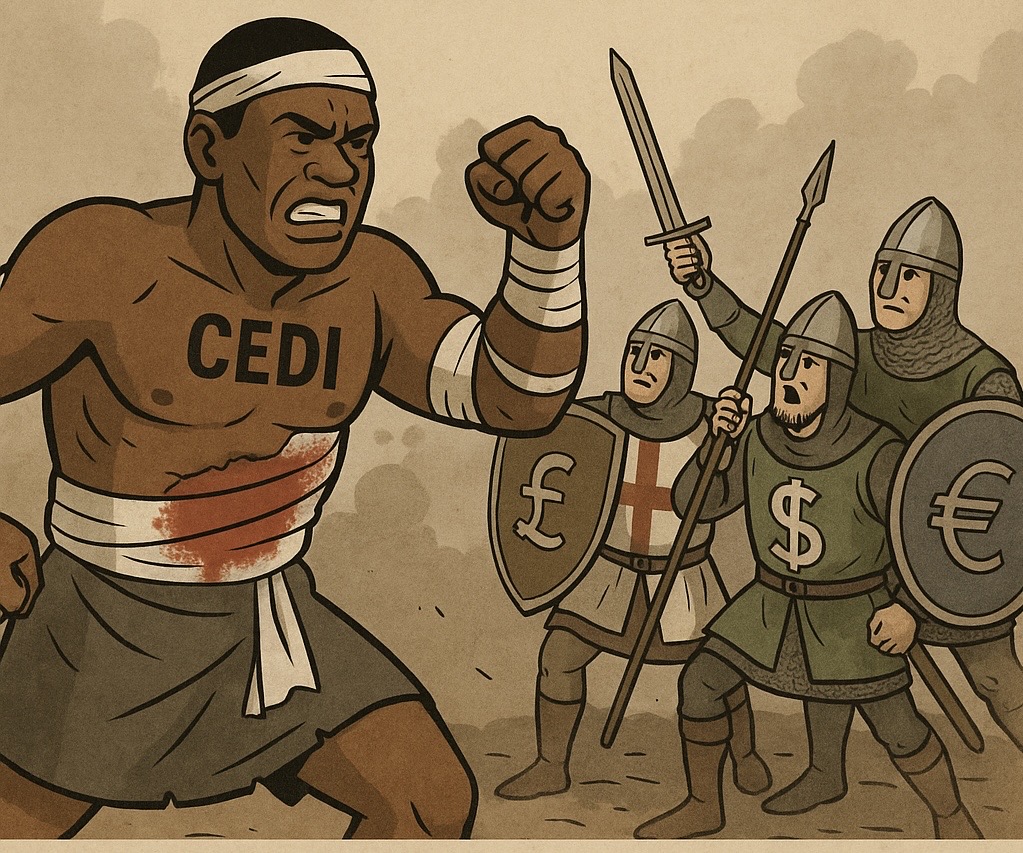
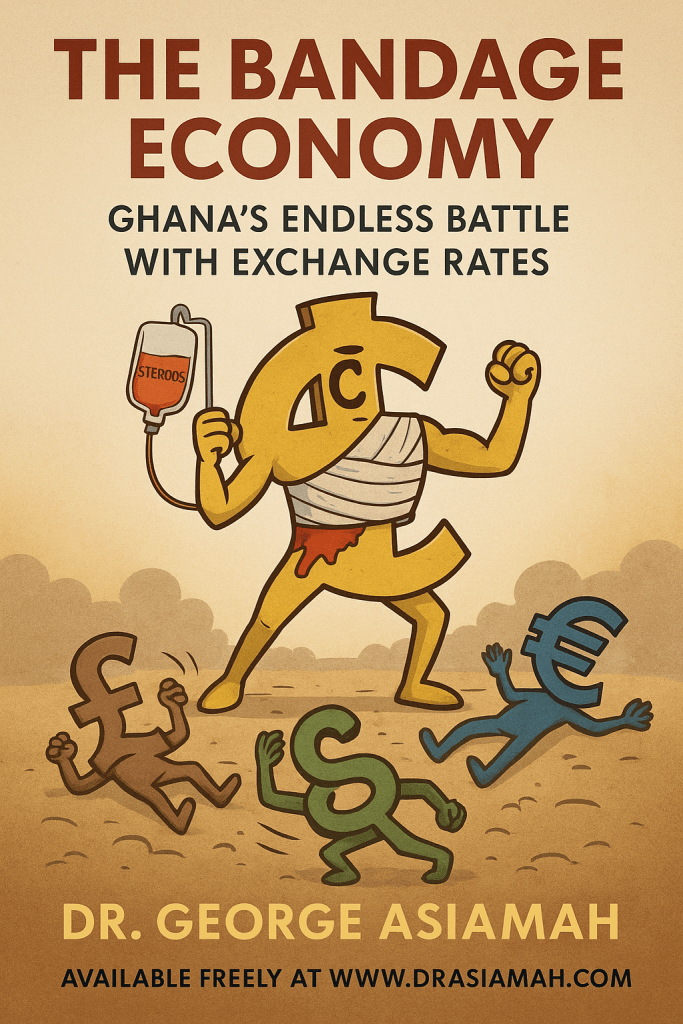
The dust settled for a moment at the Agyakrom Arena. Cedi was on his feet again, swinging punches with a swagger only steroids can buy. The crowd still sang, kelewele still hissed in pans, and trotro mates hung off the stands like drunken griots, whistling victory songs.
But the giants had not retired. They had only been surprised. And when giants recover from surprise, their words weigh heavier than their fists.
With a chest broad as the Atlantic and oil barrels rolling behind him, Dollar spat sand and bellowed:
“Listen, small boy! You think you can beat me with temporary medicine? I am not just a fighter; I am plumbing. Every pipe in your economy flows through me – fuel contracts, global trade, your IMF injections. If your pipes leak, I will flood your house. Fix the pipes, and maybe – just maybe – I will calm down. But keep wasting reserves, and I will return with thunder.”
Cedi clenched his fists, but the ache under the bandage whispered, “He is not lying.”
Adjusting his dusty monocle, Pound cleared his throat like a retired headmaster calling assembly.
“You colonial students never learn. Every September, you run to me with your school fees. Every December, you buy my spare parts for your trotro funerals. Every Easter, you come for my visas, my remittances, my consultants. And then you complain when I tighten your throat? Build skills at home, and I shall stop billing you like a stubborn headteacher. Until then, I remain your examiner, and the pass mark is in sterling.”
Cedi glared, but behind his fury lay memories of parents selling land for tuition abroad. He had no reply.
Euro dusted his stack of papers, each stamped with blue stars. His twenty-seven soldiers stood like clerks behind him, filing invoices.
“You punch me today, but tomorrow your ships will dock at my ports, begging for machinery, medicines, and wheat. You say you can fight me, but can your factories meet my standards? Can your farmers pass my sanitary tests? You depend on my bread, my vaccines, my machines. Until you build your own, you cannot escape my clipboard. Imports due, my friend. Imports are always due.”
Cedi tried to laugh it off, but deep in his gut he remembered: even cocoa beans needed European chocolate factories before they reached their true value.
The people in the stands argued.
Some jeered at the giants:
“Stop bullying our Cedi! Today he is winning. Tomorrow too he will win!”
Others scratched their heads:
“Hmm. Dollar, Pound, and Euro sound arrogant, but are they not speaking truth? If we do not produce, how can we stop them from charging us rent?”
The kelewele seller muttered, “My oil still comes from Dollar’s cousin. Unless we fry with palm oil only, we will keep smelling his kitchen.”
The Old Wise Man listened from his corner, eyes closed, staff tapping the earth like a metronome.
He spoke softly:
“Ɔkɔtɔ nwo anoma.”
(The crab does not give birth to a bird.)
“The Cedi cannot pretend to be what he is not. Steroids make him leap, but they cannot change his bones. If he does not build his own muscles—factories, farms, savings—he will always be dragged back to the mudflats where the crab belongs. A crab cannot fly; it must walk its own way. And if it wishes to fly, it must build wings, not borrow feathers.”
The crowd fell silent. Even the trotro mate stopped whistling.
Policy Reflection — What the Giants’ Taunts Mean
- Dollar’s taunt = Ghana’s dependence on oil imports, external borrowing, and reserve burn. Without fixing fiscal leaks and building real reserves, Dollar remains the landlord.
- Pound’s taunt = Education, remittances, spare parts, and consultancy dependence. Heavy outflows to the UK weaken Cedi each year. The solution is building skills, industries, and alternatives at home.
- Euro’s taunt = Dependency on European standards and imports (machines, medicines, food). Until local industries meet those standards, Euro’s clipboard rules Ghana’s destiny.
Lesson: These “giants” are not just villains – they are mirrors. Their taunts expose the weak ribs of the economy. The crowd may not like the insults, but the insults are data.
 Dr. Asiamah's Gazette