Blog Series, Ghana's Political Economy, Ghanaian Politics, Politics, The Bandage Economy

Episode 6: The Steroid Hour Wanes

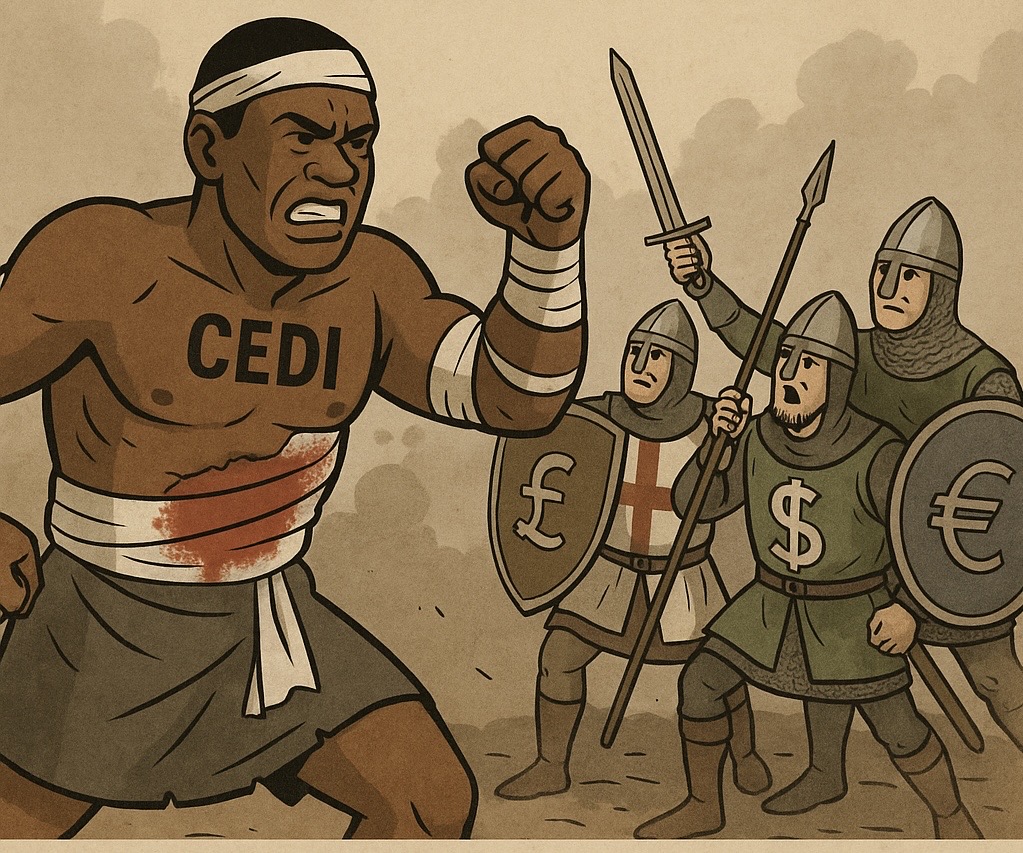
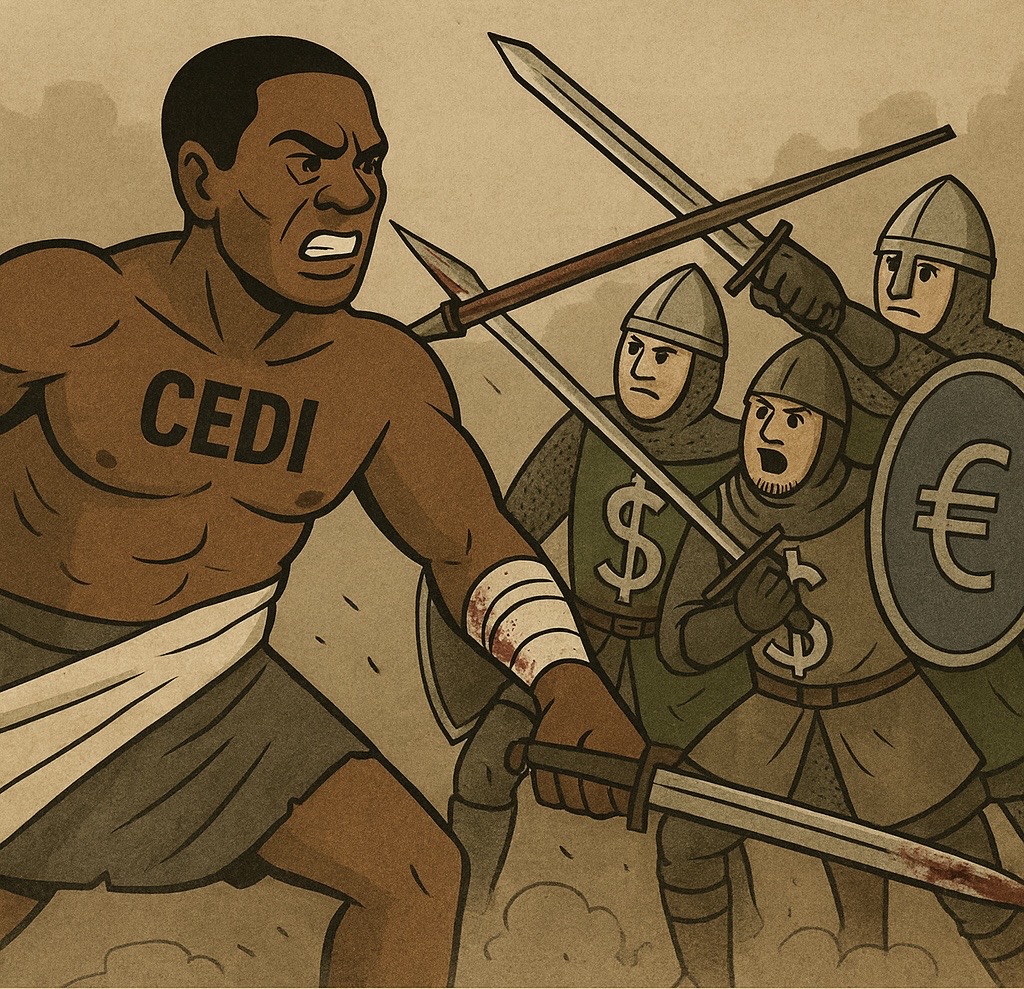
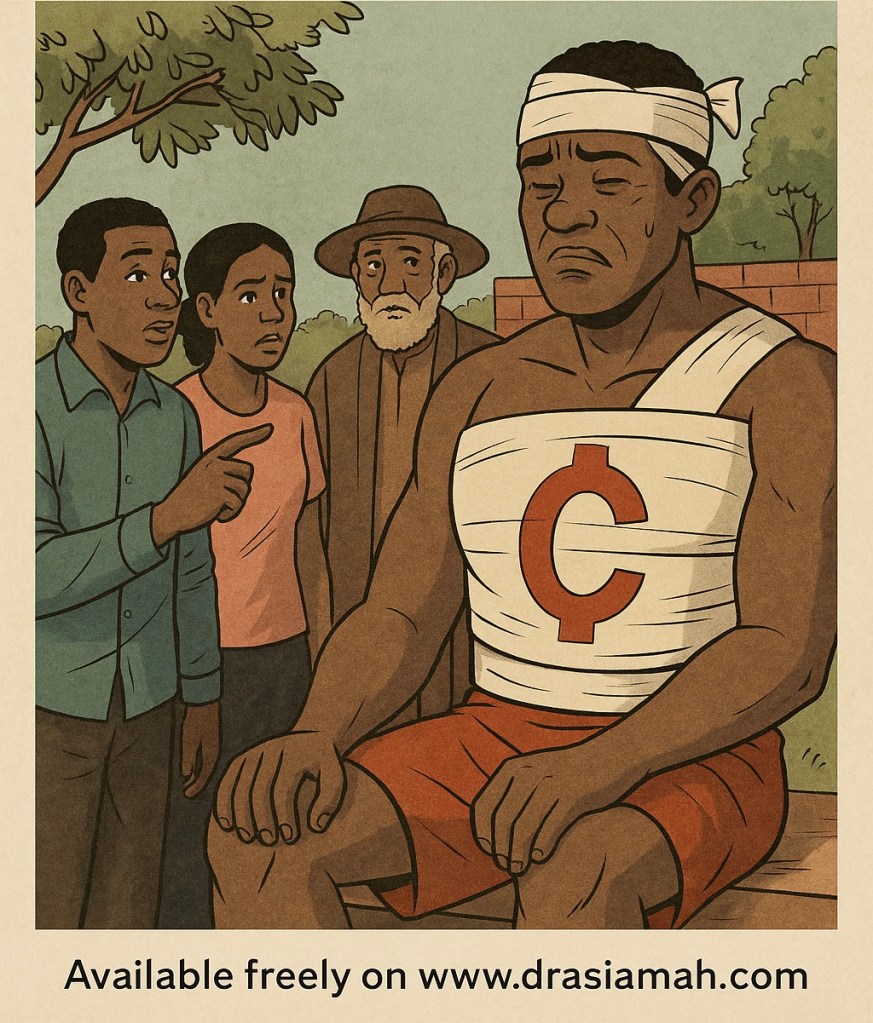
The moon rose over the Agyakrom Arena. The cheers of the crowd had dulled into background chatter—like trotro horns during rush hour, still noisy but no longer thrilling. Cedi, our patched-up fighter, still danced around the giants, but something was changing.

The bandage that once felt secure now itched like an overdue debt. The steroids, once burning like fresh palm wine, were thinning in his veins. His arms felt heavier, his legs slower. The roars of the crowd, once intoxicating, now sounded faint—like applause from people too far away to buy you kenkey.


Dollar Notices First

Dollar, the loud landlord of the arena, smirked.
“Ah, I knew it. Steroids are expensive friends. Look at him—breathing harder, swinging softer. My oil invoices will not wait forever. Reserves are draining, and soon he will come crawling.”

He stretched, broad-chested, and tapped his oil barrels like drums. The sound alone made importers nervous.


Pound Adjusts His Monocle

Pound, still holding tuition bills in one hand and spare parts in the other, leaned forward.
“September is coming, my boy. Parents will need me, car mechanics will need me, consultants will need me. When they rush, you will stumble again. Your bandage cannot stop school fees.”

He chuckled in that smug British way—half sarcasm, half invoice.


Euro Shuffles His Papers

Euro, tall and silent, stacked his regulatory files.
“Imports due, my friend. You may beat me in applause, but my clipboards are patient. Machinery orders, wheat cargo, vaccines, pharmaceuticals—they are already on their way. When they land, your boosters will not save you.”

He smiled thinly, as if to say: “I am bureaucracy. I do not rush, but I never forget.”


The Crowd Begins to Doubt

From Makola to Kejetia, people started to whisper again.

  • “Ei, but why hasn’t kenkey price dropped?”
  • “Transport still the same—didn’t they say Dollar is down?”
  • “Hmmm, the cedi is slowing. Or is it just me?”

The kelewele seller sighed. “Miracles don’t fry plantain. Only palm oil and patience do.”


Cedi Feels the Ache

Cedi swung another punch at Pound, but it missed. He tried to jab at Euro, but his arm trembled. The ache under the bandage was now louder than the crowd.

For the first time since the miracle, Cedi whispered to himself:
“Am I healed, or just high?”

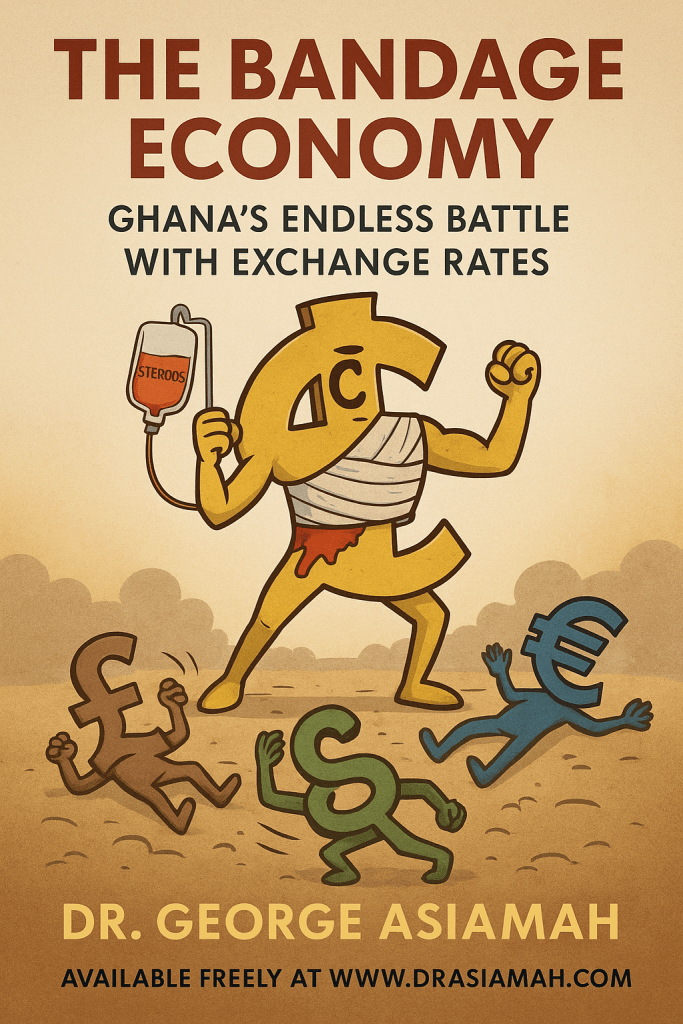
He looked at the medics in the corner. They were already rummaging for another vial, another injection. He shivered. Steroids made him strong, but also made him afraid—afraid of the moment they ran out.


The Old Wise Man Shakes His Head

Under the baobab, the Old Wise Man spoke again:

“Anomaa a ɔntua dua so a, ɛto no fam.”
(The bird that refuses to perch will fall.)

“Cedi must learn that you cannot fight forever on borrowed wings. The medicine was good for standing up, but standing up is not the same as standing strong. If he refuses to pause, to rebuild, to rest on solid perches – exports, savings, buffers – he will fall again. And this time, the crowd will not be surprised.”


Policy Reflection — The Fading Steroid Effect

  1. Reserve Drain: Central bank interventions buy temporary calm, but without new inflows, reserves shrink and confidence erodes.
  2. Seasonal Pressures: Tuition, import bills, and debt servicing create recurrent demand spikes that return as soon as the boosters fade.
  3. Sticky Prices: Inflation slows, but structural costs (fuel, food imports, levies) prevent prices from falling quickly, souring public perception.
  4. Credibility Risk: Markets, traders, and citizens can sense when recovery is built on chemicals, not capacity.

Lesson: Steroids are for emergencies, not diets. Rely on them too long, and they lose their power – while the underlying wound deepens.
Blog Series, Ghana's Political Economy, Ghanaian Politics, Political Satire & Fiction, Politics, The Bandage Economy

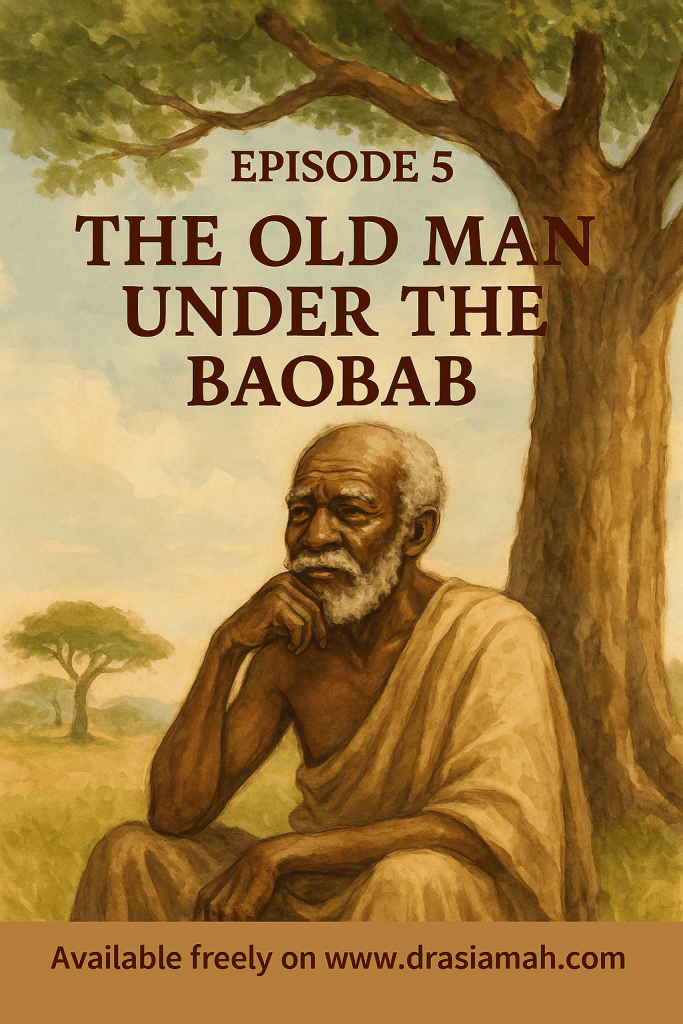
Episode 5: The Old Man Under the Baobab

The stadium noise began to soften. The initial fireworks of Cedi’s resurrection still glimmered in the minds of many, but the murmurs from Makola, Kaneshie, and Kejetia were now echoing louder than the trotro horns. Tomatoes had spoken. Cement had complained. Fuel had rolled its eyes. And the ordinary stomach – always the most honest economist – kept grumbling.

In the shade of the mighty baobab, the Old Wise Man sat. His beard was long like the minutes of a parliamentary debate, his eyes heavy with memories of cycles past. He had seen currencies come and go, debts pile and collapse, slogans fly and expire. Around him gathered apprentices, traders, students, and curious onlookers who wanted to understand why their cheers had not bought them cheaper kenkey.


The Old Wise Man Speaks

He tapped his staff on the earth three times. Dust rose, as if even the soil knew he was about to speak sense.

“My children,” he began, “you celebrate because the bandaged warrior Cedi has leapt to his feet. You sing because the giants stumbled for a moment. But let me tell you something:

Sɛ ɛprɔ a, yɛbɛte ne kankan.
(When it rots, we will smell the stench.)

What does this mean? A wound under a bandage may look neat, but when it festers, it cannot hide forever. The smell will betray the silence.”

The crowd leaned closer.

“Steroids can make a man run. But steroids do not heal broken bones. Bandages can cover sores, but they cannot cure infections. And when leaders chase optics instead of surgery, the crowd will clap today but cough tomorrow.”

He paused, allowing the proverb to sink like gari into water.


The People Respond

A market woman asked, “So, Grandfather, are you saying the NDC medics were wrong to revive Cedi?”

The Old Man smiled. “No. A dead fighter cannot train. Emergency medicine has its place. But my worry is when emergency becomes tradition, when steroids replace food, when applause replaces planning. That is when the wound rots.”

A young graduate interjected, “But isn’t it good that inflation has slowed a bit, that the exchange rate looks calmer?”

The Old Man nodded. “Yes, it is good to slow the bleeding. But slowing bleeding is not the same as restoring strength. If you remove the bandage and find no healing beneath, then what have we gained? We are only postponing the smell.”


The Giants Listen Too

From across the arena, DollarPound, and Euro leaned against the ropes, listening. They smirked, but even they knew the truth of the proverb. They had seen Cedi rise before, only to stumble again.

Dollar whispered, “He will come running back for me when reserves thin.”
Pound muttered, “September will remind him whose tuition he pays.”
Euro sighed, “Imports will not forgive him. They never do.”

The Old Wise Man raised his voice so that even the giants could hear:
“Your enemies are not merely bullies; they are reminders. They expose what you refuse to fix. Do not hate them – learn from them. For if you build your canoe strong, the flood cannot disgrace you.”


Proverb

“Sɛ ɛprɔ a, yɛbɛte ne kankan.”
(When it rots, we will smell the stench.)

Meaning: Temporary cover-ups will always reveal themselves. True solutions cannot be faked.


Policy Reflection – The Wisdom of the Baobab

The Old Man’s parable cuts deep:

  1. Emergency medicine is necessary – Liquidity injections, IMF inflows, and forex controls can prevent collapse in the short run.
  2. But temporary measures have consequences – They risk depleting reserves, creating distortions, or masking deeper weaknesses.
  3. Structural reform is the only cure – Without boosting exports, building buffers, and cutting wasteful spending, the “smell” of crisis will return.
  4. Markets have long memories – Traders, investors, and ordinary citizens will eventually sense when strength is artificial.

Lesson: The test of policy is not applause in the moment but resilience in the storm. Short-term victories mean little if they cover long-term decay.

Blog Series, Ghana News, Ghana's Political Economy, Ghanaian Politics, The Bandage Economy

Episode 4: Murmurs from the Market

The arena still echoed with cheers for Cedi. The trotro mates whistled victory tunes, the kelewele sellers sang exchange-rate choruses, and even the drunk palm wine tappers staggered in to declare, “Our boy is back! Dollar is limping!”

But while the stadium roared, the real world – the quiet, unforgiving marketplace – remained unimpressed. Markets do not clap; they calculate.


The Tomatoes Speak

At Makola, tomatoes sat in their baskets, glistening under the sun.

One tomato whispered to the other:
“So, they say Cedi is now a lion on the battlefield.”

The other replied:
“Lion or lizard, did you see the cost of transport? My journey from Navrongo to Accra is still paid in diesel, and diesel bows to Dollar. Let Cedi run laps in the arena; my price will not fall just because the crowd is excited.”

The women selling them nodded in agreement, adjusting their headscarves.


The Fuel Frowns

At the pumps, fuel yawned and stretched.

“Look at them,” fuel said, watching the arena fireworks on a small TV. “Cheering as if my liters care about hashtags. Until the refinery sings, and until government taxes loosen their belt, I will not bow. Cedi can do press-ups on steroids, but I – fuel – still listen to global oil prices, not local slogans.”

A taxi driver grumbled, wiping sweat from his brow:
“So, this miracle rate, why hasn’t my tank clapped for me yet?”


Cement Crosses Its Arms

Cement sat in its dusty bag at the hardware shop, shoulders broad and unmoved.

“Exchange rates dance every day,” Cement growled. “But my story is longer. Energy costs, shipping fees, raw materials—all of them still salute the giants. If Cedi wants me to fall in price, he must win the marathon, not just the sprint. For now, I remain heavy.”

The mason sighed. “So my building project still sleeps. Even after this miracle, blocks still cost like I’m building with gold.”


The Market as Chorus

Everywhere the same chorus rose:

  • Soap in Kaneshie: “We were imported at the old rate. We cannot turn into charity overnight.”
  • Rice in Kumasi: “Until local harvests replace me, my price is chained to ships, not cheers.”
  • Pharmaceuticals in Tema: “We bow to Euro’s clipboard, not Cedi’s sprint.”

The people began to murmur. “If Cedi has defeated Dollar and slapped Pound, why are our pockets still crying? Why is kenkey still arguing with transport fares? Why does waakye ignore the exchange rate headline?”


The Old Wise Man Under the Baobab

The Old Wise Man listened as the murmurs reached him. He tapped his staff and declared:

Ɛsono afu gye mmerɛ ansa na aprɔ
(The elephant may be dead, but its belly takes time to collapse.)

He explained:
“When Cedi rises in the arena, it does not mean prices will fall tomorrow. Traders bought their stock at yesterday’s rate, so they price for yesterday’s pain. Wholesalers fear tomorrow’s uncertainty, so they pad today’s price. And taxes and levies are glue on the price tag; even when the exchange rate breathes out, the levies keep breathing in.”

The apprentices nodded. “So, Grandfather, victory in the arena is not the same as peace in the market?”

He smiled. “The stomach listens to the kitchen, not the stadium. The day we plant enough, process enough, and save enough, then the kitchen will finally clap for the arena.”


Policy Reflection – Why Prices Stay Sticky

  • Import Lags: Goods already in shops were purchased at old rates. Prices don’t adjust immediately.
  • Expectations: Traders hedge against possible future depreciation by keeping prices high even when Cedi rises.
  • Taxes & Levies: Petroleum, utilities, and cement prices are cushioned (or worsened) by taxes and regulatory margins that don’t move with the forex rate.
  • Structural Weakness: Local production is too weak; we depend on imports for food, fuel, medicine, and construction. Until that changes, forex improvements won’t translate quickly.

Lesson: A “miracle” exchange rate does not mean instant cheaper prices. The market runs on memory, caution, and structure – not on applause.

Blog Series, Ghana's Political Economy, Ghanaian Politics, Political Satire & Fiction, Politics, The Bandage Economy, UK Politics

Episode 3: The Giants and Their Taunts

The dust settled for a moment at the Agyakrom Arena. Cedi was on his feet again, swinging punches with a swagger only steroids can buy. The crowd still sang, kelewele still hissed in pans, and trotro mates hung off the stands like drunken griots, whistling victory songs.

But the giants had not retired. They had only been surprised. And when giants recover from surprise, their words weigh heavier than their fists.


With a chest broad as the Atlantic and oil barrels rolling behind him, Dollar spat sand and bellowed:

“Listen, small boy! You think you can beat me with temporary medicine? I am not just a fighter; I am plumbing. Every pipe in your economy flows through me – fuel contracts, global trade, your IMF injections. If your pipes leak, I will flood your house. Fix the pipes, and maybe – just maybe – I will calm down. But keep wasting reserves, and I will return with thunder.”

Cedi clenched his fists, but the ache under the bandage whispered, “He is not lying.”


Adjusting his dusty monocle, Pound cleared his throat like a retired headmaster calling assembly.

“You colonial students never learn. Every September, you run to me with your school fees. Every December, you buy my spare parts for your trotro funerals. Every Easter, you come for my visas, my remittances, my consultants. And then you complain when I tighten your throat? Build skills at home, and I shall stop billing you like a stubborn headteacher. Until then, I remain your examiner, and the pass mark is in sterling.”

Cedi glared, but behind his fury lay memories of parents selling land for tuition abroad. He had no reply.


Euro dusted his stack of papers, each stamped with blue stars. His twenty-seven soldiers stood like clerks behind him, filing invoices.

“You punch me today, but tomorrow your ships will dock at my ports, begging for machinery, medicines, and wheat. You say you can fight me, but can your factories meet my standards? Can your farmers pass my sanitary tests? You depend on my bread, my vaccines, my machines. Until you build your own, you cannot escape my clipboard. Imports due, my friend. Imports are always due.”

Cedi tried to laugh it off, but deep in his gut he remembered: even cocoa beans needed European chocolate factories before they reached their true value.


The people in the stands argued.

Some jeered at the giants:
“Stop bullying our Cedi! Today he is winning. Tomorrow too he will win!”

Others scratched their heads:
“Hmm. Dollar, Pound, and Euro sound arrogant, but are they not speaking truth? If we do not produce, how can we stop them from charging us rent?”

The kelewele seller muttered, “My oil still comes from Dollar’s cousin. Unless we fry with palm oil only, we will keep smelling his kitchen.”


The Old Wise Man listened from his corner, eyes closed, staff tapping the earth like a metronome.

He spoke softly:
“Ɔkɔtɔ nwo anoma.”
(The crab does not give birth to a bird.)

“The Cedi cannot pretend to be what he is not. Steroids make him leap, but they cannot change his bones. If he does not build his own muscles—factories, farms, savings—he will always be dragged back to the mudflats where the crab belongs. A crab cannot fly; it must walk its own way. And if it wishes to fly, it must build wings, not borrow feathers.”

The crowd fell silent. Even the trotro mate stopped whistling.


Policy Reflection — What the Giants’ Taunts Mean

  • Dollar’s taunt = Ghana’s dependence on oil imports, external borrowing, and reserve burn. Without fixing fiscal leaks and building real reserves, Dollar remains the landlord.
  • Pound’s taunt = Education, remittances, spare parts, and consultancy dependence. Heavy outflows to the UK weaken Cedi each year. The solution is building skills, industries, and alternatives at home.
  • Euro’s taunt = Dependency on European standards and imports (machines, medicines, food). Until local industries meet those standards, Euro’s clipboard rules Ghana’s destiny.

Lesson: These “giants” are not just villains – they are mirrors. Their taunts expose the weak ribs of the economy. The crowd may not like the insults, but the insults are data.

Blog Series, Ghana's Political Economy, Ghanaian Politics, Political Satire & Fiction, Politics, The Bandage Economy

Episode One: The Fall of the Cedi

The drums of Agyakrom Arena rolled, and the crowd gathered. In the red corner stood Cedi, the wiry fighter of the land. He wasn’t the tallest, nor the strongest, but he carried cocoa in his fists, gold in his teeth, and oil dripping down his back. The people chanted his name, believing their warrior could at last tame the mighty giants.

Behind him stood his commander, the NPP Marshal, decorated not with medals but with slogans stitched into his uniform: “Battle-Tested Plan,” “Dr. Fundamentals,” “One District, One Factory.” His sword gleamed with promises; his shield shone with borrowed optimism.

“Forward, Cedi!” the marshal shouted. “This is your destiny.”

But the battle was no village wrestling contest. Across the arena, three giants lumbered forward: Dollar, broad-chested, carrying oil barrels in one hand and global invoices in the other. Pound, dressed like a retired colonial officer, cane tucked under his arm, school-fee receipts in his pocket. Euro, tall, sleek, marching in formation with twenty-seven foot soldiers holding briefcases of regulations, machinery, and pharmaceuticals.

The whistle blew.

Dollar swung first, a heavy punch from crude oil imports. Cedi staggered. Pound jabbed with spare parts and tuition fees, cracking his ribs. Euro didn’t shout; he suffocated him quietly with wheat, vaccines, and machinery. The crowd gasped as Cedi stumbled, his shield splintered, his armour cracked.

“Hold the line!” the marshal cried. But the line broke. Cedi fell face-first in the dust, groaning, the flag of Agyakrom trampled beneath him.

The people looked at each other in silence. The trotro mate muttered: “So, this is the plan?” A Makola trader shook her head: “Even my tomatoes are ashamed.”

The giants didn’t even boast; they simply stood over him, as if to say: “This is what happens when you enter the ring unprepared.”


Proverb

“Sɛ nsuyire ba a, ɛna yɛhu deɛ ne kodoɔ yɛ papa.”
(When the floods come, we see the quality of the canoe.)


Policy Reflection

When global storms hit – rising oil prices, higher imports, currency shocks – Cedi revealed what had long been hidden: an economy built on weak planks. The canoe had been painted with slogans, but its wood was cracked. Imports outpaced exports, debts outpaced revenues, and buffers were too thin to weather the current.

In the flood of global markets, you do not rise by chanting; you rise by building a canoe that floats.

Read Episode Two

Blog Series, Ghana News, Ghana's Political Economy, Ghanaian Politics, Political Satire & Fiction, Politics, The Bandage Economy

Prologue: The Cedi Vs. The Giants

Long before the drums beat at Agyakrom Arena, the fate of Cedi was already whispered in chop bars, lorry parks, and Parliament corridors.

Cedi was no ordinary fighter. He was born in 1965, young and ambitious, wrapped in national pride like kente on Independence Day. At birth, he carried cocoa in one hand, gold in the other, and oil hidden beneath his skin. His parents promised him glory:
“You will stand tall among the giants. You will not beg; you will command.”

But the world is not a fair marketplace. The giants – DollarPound, and Euro – had been in the ring for centuries, bulging with the muscles of empire, trade, and industry. They had their networks, their soldiers, their standards, their debts. They did not just fight with fists; they fought with memories.

Cedi grew up in this world, always smaller, always hustling. Sometimes he rose with swagger, sometimes he fell with shame. He had seen coups and slogans, IMF infusions and debt write-offs, promises and disappointments. He had been bandaged, boosted, and broken more times than the crowd could count.

Yet the people of Agyakrom never gave up on him. Every election, they dressed him in a new uniform, gave him a new commander, and shouted, “This time, he will conquer!” The crowd’s memory was short, but their hope was long.

The arena itself was merciless. Every import, every school fee, every litre of fuel was another punch. Every cocoa harvest, every gold sale, every donor inflow was another jab back. Victories were rare, defeats were common, but the spectacle never ended.

The elders said:

“Sɛ anomaa anntu a, ɔbuada.”
(If the bird does not fly, it starves.)

Cedi might never soar like Dollar or Pound, but he had to perch somewhere sturdy – or risk falling forever.

This is the story of Cedi: a fighter wounded and revived, mocked and applauded, sprinting on borrowed steroids, and finally learning that his survival depends not on miracles but on habits. It is the story of Ghana’s economy, told in the dust and sweat of a ring where applause is loud but stomachs are louder.

The battle of Cedi is not just about exchange rates; it is about identity, resilience, and the stubborn hope of a people who refuse to stop cheering, even when their pockets are empty.

And so, the drums beat again. The giants tighten their gloves. The medics prepare their syringes. The Old Wise Man sharpens his proverbs. And the crowd leans forward, asking the eternal question:

“Can Cedi stand?”


Click to Read Episode One – The Fall of the Cedi

Ghana News, Ghana's Political Economy, Ghanaian Politics, Politics

Don’t Bet on the Cedi… It Has Mood Swings

In Ghana, we celebrate the cedi’s short-term gains like a political victory parade. And in 2025, the band is playing again. The cedi has appreciated by over 24% against the US dollar in just a few months, dropping from over GH₵16 to around GH₵10.35. On the surface, this looks like redemption. A national comeback. Proof that the “economic management team” is finally awake.

But before we start naming our kids after the Finance Minister, and nominate the currency for the Nobel Prize in Economic Recovery, let’s take a hard, analytical look. Because history – and economic logic – tell us this performance is more likely to be a sugar rush than a sustainable meal.

Here’s why:

Supply of Dollars Will Begin to Dry Up

When a currency appreciates sharply in a short period, it disturbs the natural rhythm of the market. Those who hold dollars become hesitant. If you had dollars at GH₵16 and now it’s GH₵13, you’re not going to rush and exchange. You’ll wait – watching nervously, hoping the cedi will slide again so you can recover your margin. This behavior is natural, and it immediately begins to choke supply.

Remittance flows, a critical lifeline of Ghana’s forex market, also respond negatively. When the cedi is weak, sending money from abroad makes sense. For instance, if someone sending $100 previously got GH₵1,600 but now gets only GH₵1,300, they may wait or send less. Some may delay their projects, especially, if the appreciation of the currency does not correspond to reduction in price of goods. That is to say, whenever there is a sharp appreciation of a currency, inflows naturally slow, and another source of foreign currency begins to dry up.

Exporters, too, feel the pinch. When they convert their dollar earnings into cedis at a weaker rate, they earn more. But with this new wave of appreciation, their revenue in local currency shrinks. Rational business people do what rational business people do: they delay repatriation, under-invoice their exports, or keep funds abroad. Again, this starves the market of much-needed forex.

Demand for Dollars Will Start Creeping Up

While the supply side begins to strain, the demand side quietly builds up pressure. A stronger cedi means cheaper imports. For a heavily import-dependent country like Ghana, this spells trouble. As imports become more affordable, importers begin to order more – everything from electronics and machinery to fuel and food. This increased demand for dollars puts pressure back on the very currency that was just gaining strength.

Then comes the speculator class. These actors don’t buy into the hype – they’ve seen this before. Every sharp appreciation, they argue, is a temporary market sugar high. So while everyone else is praising the finance ministry, speculators begin to quietly accumulate dollars, betting on the inevitable reversal. And they are often right. Once the market begins to sense that the rally is over, the panic starts. Importers scramble for dollars. Parents looking to pay school fees abroad rush to buy. Businesses accelerate their purchases. The psychology shifts from confidence to fear, and in that moment, the cedi starts its descent.

The Invisible Hand the Gravity of Reality

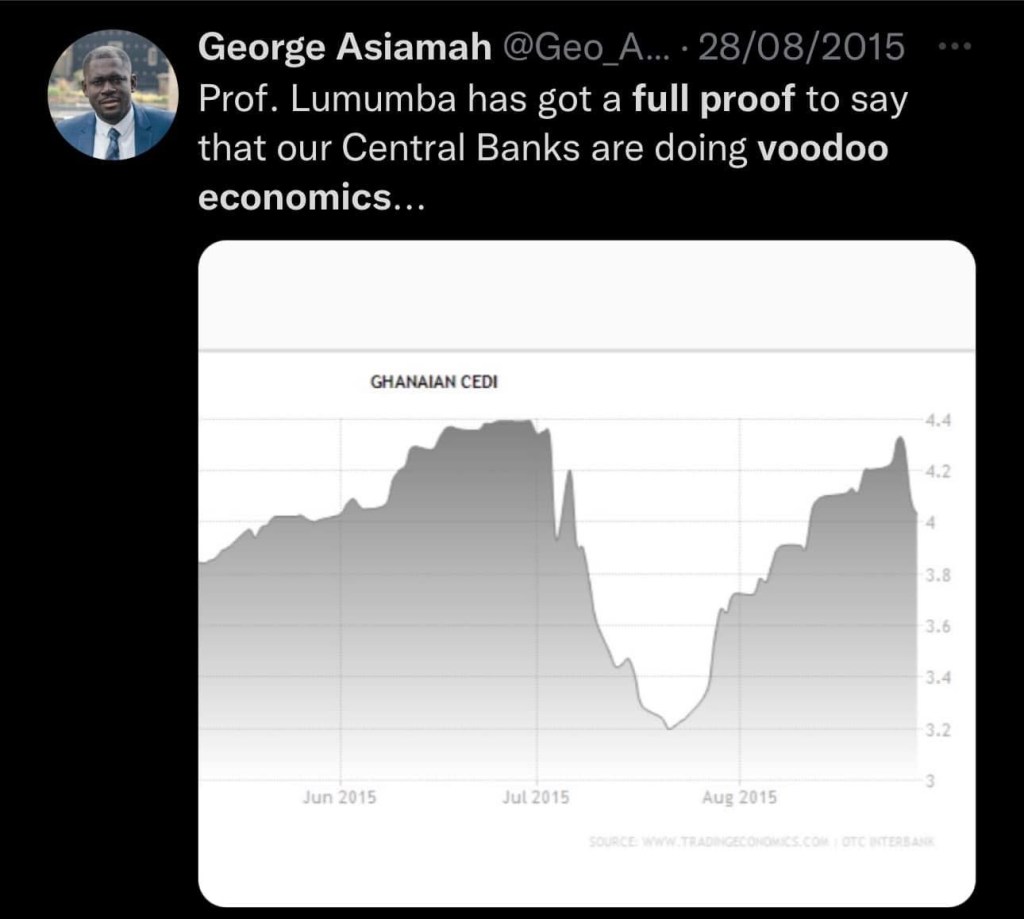
This isn’t a new story. In 2015, the cedi surged in June, and by August, it had fallen just as sharply. In 2022, the same pattern repeated. There’s nothing uniquely 2025 about this. We are simply watching the same script play out, only with new actors and slightly different lines.

What’s often missing in these debates is the understanding that the market, like nature, abhors imbalance. Adam Smith called it the “invisible hand.” But let’s call it what it is – gravity. You can push the cedi up with policy tools, foreign inflows, gold-for-oil arrangements, or central bank interventions. But if the structural foundations aren’t strong – if your economy still imports more than it exports, still depends on remittances and commodity booms, still lacks industrial depth – then the appreciation is merely a balloon on a windy day.

Eventually, gravity wins.

So yes, you may clap for the cedi now. You may tweet, “Ato Forson is the man!” or argue over whether Bawumia could’ve done this. But remember: unless we fix the fundamentals, every sharp rise will end with a fall. That’s not cynicism – it’s economics. And unlike politics, economics doesn’t campaign. It simply responds.

Ghana News, Ghana's Political Economy, Ghanaian Politics, Politics

The Cedi is Smiling – But Should We…?

Over the past month, Ghanaians have witnessed a sharp appreciation of the Cedi. All the major trading currencies, especially the US Dollars, are now being humbled by our currency – causing ripples of excitement across radio shows, social media, and street corners. In a country where exchange rate movements are treated with the same passion as Black Stars matches, the recent cedi performance is naturally triggering political bragging rights.

With the NDC back in office for less than six months, some supporters have already crowned Dr. Cassiel Ato Forson the miracle worker. “What Bawumia and Ofori-Atta couldn’t do in 8 years, Ato Forson has done in 6 months!” is the new anthem of partisan pride. But while we celebrate with dancing emojis and #CediIsBack hashtags, let’s take a breath – and a glance into our rearview mirror.

Because we’ve been here before.

Déjà vu, Anyone?

In President Mahama’s first term (2012–2016), Ghanaians saw similar episodes. At one point in 2014, the cedi lost nearly 40% of its value – then made a dramatic comeback after the Bank of Ghana injected dollars and tightened monetary policy. The then Finance Minister, Seth Terkper, even launched the now infamous “Home Grown Policies” programme – celebrated by some, criticized by others, and followed by an IMF bailout.

Each time the cedi gained strength, we thought the corner had been turned. Each time, the dollar eventually reminded us who was boss.

Even under the Akufo-Addo/Bawumia administration, the cedi had its brief “honeymoon” phases – especially after Eurobond inflows, syndicated cocoa loans, or IMF disbursements. The currency appreciated, optimism surged, but then came the reversals. These were not failures of specific finance ministers alone – they were reflections of a structural vulnerability that runs deep in the Ghanaian economy.

Political Football or Economic Fundamentals?

The temptation to turn every uptick into a partisan football match is strong. We know the rules: If the cedi falls, blame the Finance Minister. If it rises, crown him saviour. But currency strength isn’t the product of charisma or political proximity to President Mills’ ghost. It’s about fundamentals, market confidence, and often, external factors we can’t control.

No doubt, the new finance minister deserves credit for calming the markets. His tone has been measured, his statements less performative than his predecessors’, and his initial actions suggest an effort to restore fiscal discipline. That said, the real test will come in:

  • Managing debt repayments without mortgaging future revenues;
  • Growing domestic production to reduce reliance on imports;
  • Expanding the tax base without stifling growth;
  • And reforming institutions to prevent future macroeconomic shocks.

Can the NDC administration resist the political pressure to over-spend ahead of elections? Can it negotiate smartly with the IMF, without triggering public backlash or social unrest? Can it shield the poor while implementing structural reforms?

That’s where the actual battle lies – not in the month-to-month dance of the exchange rate.

What Are the Real Indicators?

Is inflation down sustainably? Are we exporting more than we import? Is the tax base broadening? Are we reducing our debt-servicing burden, or merely refinancing it? These are the indicators that will tell us whether this cedi appreciation is a trend or a teaser.

We’re also yet to see the full fiscal picture. The mid-year budget will be the real test of Ato Forson’s strategy. Will he cut politically costly subsidies? Will he resist the temptation of printing money to fund populist programmes? Will he negotiate with external creditors and investors in ways that secure both debt relief and investor confidence?

These are not six-month miracles. They are long-haul battles. And even a sharp appreciation, while psychologically soothing, can come with side effects — for example, harming export competitiveness or disincentivising diaspora remittances.

A Time for Humility, Not Hype

Ghana’s economic story is complex. The cedi’s behaviour is not an emotional teenager reacting to the Finance Minister’s tone of voice; it is a reflection of deep-rooted structural issues, geopolitical dynamics, and market sentiments.

If history teaches us anything, it is that premature jubilation often precedes disappointment. So, while we appreciate the short-term gains — and God knows we needed some good news — we must resist the urge to confuse symptom relief with full recovery.

Dr. Ato Forson may well prove to be one of Ghana’s most effective Finance Ministers. But let’s give him the space and time to actually do the work, not just benefit from a temporary upswing and social media applause.

As the saying goes, “When the rain drizzles in the dry season, don’t start planting your maize just yet.”

So to my fellow Ghanaians, breathe… but don’t break into azonto just yet. The economic battle isn’t won on the forex charts of May 2025. It’s fought — and won — in the policies, institutions, and choices that shape the months and years ahead.

Daily Motivation, Everyday Life

Why Give Up Now? There’s So Much More to Complain About

Life is tough, but so are you. Yeah, I know, it sounds like something you’d find on a motivational poster hanging in a High School classroom or maybe printed on a mug in some office supply store. But here’s the thing: it’s true. Life is like that personal trainer who yells at you to keep pushing through the pain. It’s relentless, unyielding, and at times, completely infuriating. But guess what? So are you.

Think about it. You’ve made it this far, haven’t you? You’ve faced challenges, heartbreaks, failures, and a myriad of “what the actual heck” moments, and yet, here you are, still standing (or sitting, depending on your current state of affairs). You’ve weathered storms that could have knocked anyone else flat, but you kept going. Why? Because deep down, beneath all the self-doubt and the occasional Netflix binge, you know you’re capable of greatness.

Believing in yourself is a bit like learning to ride a bike. At first, it’s wobbly and terrifying. You’re not sure if you’re going to faceplant into the sidewalk or glide smoothly down the road. But with each pedal, each shaky attempt, you get a little better. Eventually, you’re zooming around, wind in your hair, feeling like you’ve conquered the world. Self-belief works in much the same way. It’s about taking that first, often shaky step and then another, and another, until you’re cruising along, confident in your abilities.

Take a moment to reflect on the trials you’ve already overcome. Remember that time you didn’t get the job you were sure was your ticket to greatness? Or when that relationship you thought would last forever crumbled like a cheap cookie? You were devastated, right? But you picked yourself up, brushed off the metaphorical dirt, and kept going. You found another job, maybe not right away, but eventually. You met new people, forged new connections, and perhaps even found someone who was a better fit. Each setback was a setup for a comeback, as trite as that might sound.

The key to all this isn’t some mystical inner strength only a few possess. It’s about persistence, plain and simple. It’s about waking up every day and deciding, sometimes against all odds, to keep moving forward. It’s not glamorous, and it sure as hell isn’t easy, but it’s what gets you through.

Believing in yourself also means acknowledging your imperfections and embracing them. You’re not a superhero, and you’re not supposed to be. Perfection is a myth perpetuated by Instagram filters and Photoshop. Real life is messy and imperfect, and that’s okay. It’s okay to admit you’re struggling. It’s okay to ask for help. And it’s definitely okay to fail. Failure is not the end of the road; it’s a detour, a chance to learn and grow.

Life is a marathon, not a sprint. There will be days when you feel like you’re running on fumes, and that’s okay. Just keep putting one foot in front of the other. Even if you’re crawling, you’re still moving forward. And if you ever doubt your strength, just look back at everything you’ve overcome. You’re still here, still fighting, still dreaming. That takes guts.

So, here’s to you, the unsung hero of your own story. Keep going. You’re stronger than you think. Believe in yourself, even if no one else does. And remember, life might be tough, but so are you. Now go out there and show the world what you’re made of. Or at least, make it through the day without losing your sanity. Either way, you’ve got this.